This guide explains what actually wears out in a USB-C connector, how the 10,000-cycle rating works, where cost-driven factories cut corners, and what US brand buyers should write into their specification so durability is a contractual requirement rather than a hope.
What the 10,000-Cycle Rating Means
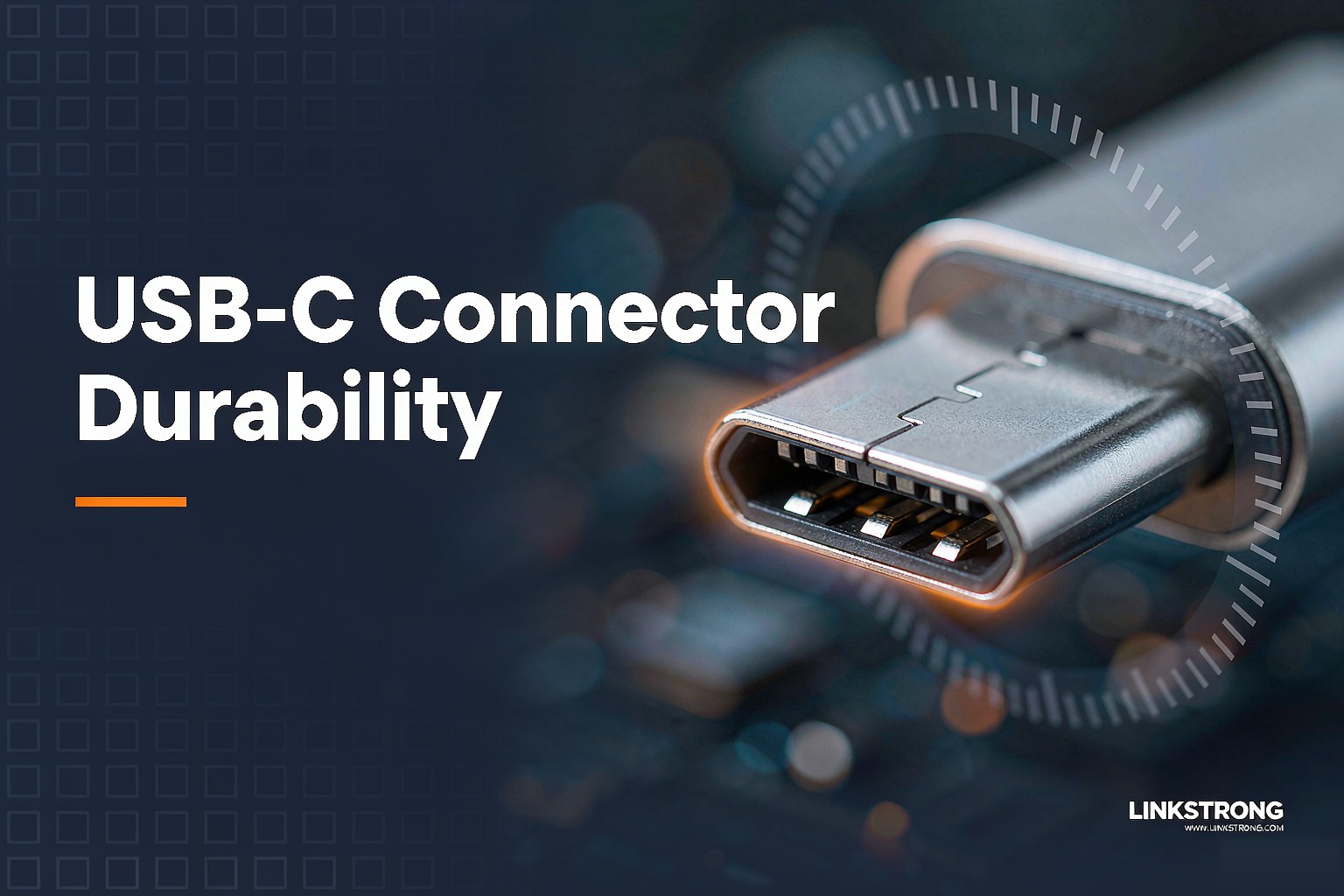
The USB Type-C specification requires the connector to survive 10,000 insertion and removal cycles. The rating describes the connector itself - the spring fingers inside the receptacle and the plug shell - under controlled conditions: reasonable alignment, reasonable force, no contamination.
The engineering logic is straightforward. The center tongue of a USB-C plug carries 24 contact pins; the ground and power pins on the outer rail handle most of the current, while the spring latches keep contact force stable over time. Every insertion flexes those springs slightly. A well-built connector retains its contact force within tolerance after 10,000 cycles; a poorly built one loses force earlier, and rising contact resistance shows up first as intermittent charging, then as heat at the connector, then as a dead cable.
Real-world failure usually comes faster than the rating because the rating assumes conditions a retail cable never enjoys: dust in a gym bag, lint compacted inside a phone port, side-loading when a phone charges face-down on a nightstand.
Where Factories Cut Corners
Connector cost is measured in fractions of a cent, and three levers shrink it:
- Shell plating. A full nickel shell with proper plating resists corrosion and keeps insertion force stable. Thinner plating passes the outgoing inspection but oxidizes months later - which is exactly when warranty claims arrive, not when the cable ships.
- Spring finger material and thickness. The contact springs are often the difference between a 10,000-cycle part and a 3,000-cycle part. Cheaper alloys fatigue faster; thinner stamps lose force sooner.
- Tongue anchoring. The center tongue must be firmly anchored in the housing. On low-cost builds, the tongue can shift after repeated insertions, exposing solder joints to bending stress - this is why some cables fail at the connector rather than at the classic strain-relief point.
None of these shortcuts are visible on a finished sample. They surface in cycle testing, which is precisely the test most buyers never ask for.
What to Put in the Spec
Durability requirements only exist if someone writes them down. For consumer retail cables, we recommend four line items:
1. Insertion cycle test: 10,000 cycles minimum, tested per the USB Type-C connector specification, with contact resistance measured at intervals - not just a bare cycle count.
2. Insertion and extraction force windows (typical and maximum), so the plug neither loosens prematurely nor requires two hands.
3. Shell plating specification - nickel shell thickness and, for exposed metal housings, corrosion resistance requirements such as 48-hour salt spray.
4. Post-cycle functional check: after the cycle test, the cable must still negotiate PD power at rated wattage and pass a data-line continuity check.
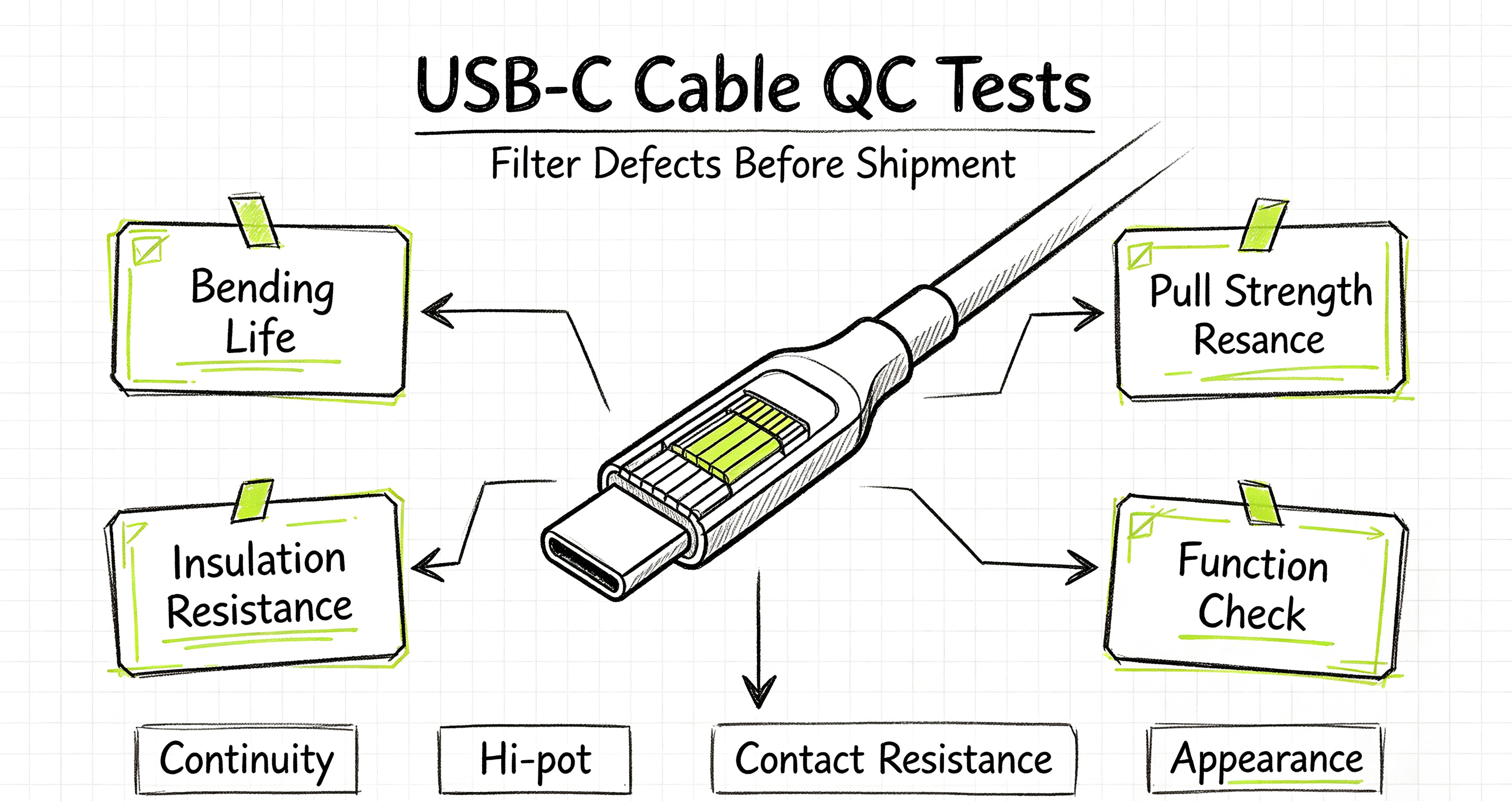
The fourth item matters more than it looks. A connector can survive 10,000 mechanical cycles and still fail the job it exists to do if contact resistance has drifted. Our batch QC checklist lists the tests we run on every production lot, and cycle-life verification sits on top of them for programs that need it.
How Durability Interacts With the Rest of the Cable
Connector life does not exist in isolation. The failure points of a cable form a chain, and the weakest link defines the warranty experience. In our failure analysis of returned USB-C cables, connector contact failure and strain-relief breakage together account for the majority of returns. A 10,000-cycle connector behind a 500-bend strain relief is a 500-bend cable.
That is why we evaluate connector durability together with strain relief design and bend testing rather than as a standalone checkbox - the spec should cover the whole input end of the cable, because that is where users destroy products.
The Brand-Buyer Bottom Line
For a retail cable, connector durability is a warranty-cost decision disguised as a component detail. The difference between a verified 10,000-cycle connector and an unverified one is a few cents per unit; the difference in returned-unit rate can be whole percentage points, which on thin-margin accessories is the profit.
If you are specifying a custom cable, include the four durability line items above in your RFQ and ask suppliers to state their cycle-test method. Or send us your requirement directly through our RFQ guide or contact page - we will quote the connector grade against your target warranty period and share cycle-test data from our lab before you commit to a PO.