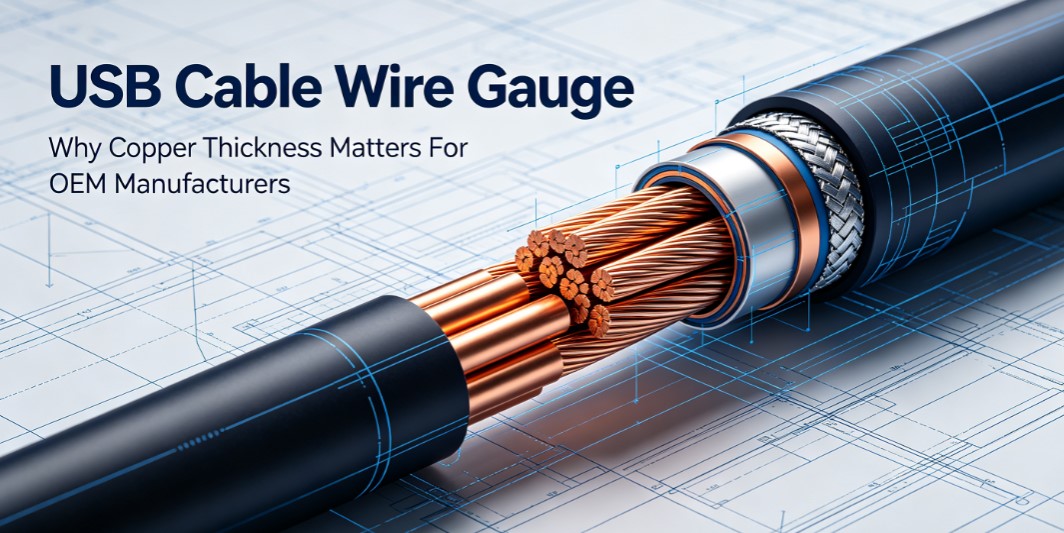
When you customize USB charging cables for consumer electronics, wire gauge (AWG) is one hidden but critical specification that many brand buyers overlook. The AWG number represents the thickness of copper conductors inside the cable, and it directly decides charging performance, thermal safety and product lifespan.
A key rule for AWG: the smaller the AWG number, the thicker the copper wire. Thicker copper has lower electrical resistance, less voltage drop, and can carry higher current safely. For example, 20AWG copper is much thicker than 24AWG, suitable for high-power PD charging up to 100W or 240W. Thin 26AWG or 28AWG copper works only for low-current slow charging, such as small earbud charging cables.
If you select insufficient copper thickness for high wattage applications, excessive voltage drop will appear. The cable cannot reach the rated power, charging speed becomes slow, and extra resistance generates heat. Long-term overheating will accelerate jacket aging, increase failure rate and bring safety risks, which may trigger product recalls or bad reviews for your brand.
Copper purity also works together with wire gauge. High-purity oxygen-free copper has better conductivity than recycled copper. Many low-cost suppliers use mixed recycled copper paired with thin AWG to cut costs, but these cables fail easily after short use. For OEM brands targeting North America and EU markets, stable copper quality is essential to pass certification audits.
When you place bulk OEM orders, clearly define AWG specs according to your target power rating. LINKSTRONG can customize internal copper wire gauge, copper purity and outer jacket material to match your product positioning, whether for low-cost gift cables or premium high-power PD cables.
Explore our custom USB cable solutions
FAQ
Frequently Asked Questions
Quick answers for OEM and wholesale cable buyers.
Does a smaller AWG number mean a thicker wire?
Yes. 20AWG copper is much thicker than 24AWG, carries more current safely and produces less voltage drop — which is why high-power PD cables use heavier gauge conductors.
What happens if the wire gauge is too thin for the wattage?
Voltage drop rises, the cable cannot reach its rated power, charging slows down, and the extra resistance generates heat that ages the jacket, increases failure rate and shortens cable life.
What gauge do I need for 100W USB-C charging?
100W PD cables need heavy conductors — typically around 20AWG for the power pair — plus an E-marker chip. Thin 26AWG or 28AWG copper is only suitable for low-current charging such as earbuds.
Does copper purity matter as much as wire gauge?
It matters a great deal. High-purity oxygen-free copper conducts better than recycled copper, and mixed recycled copper paired with thin AWG is one of the most common causes of early cable failure.
 Technical & Testing
2026-09-17
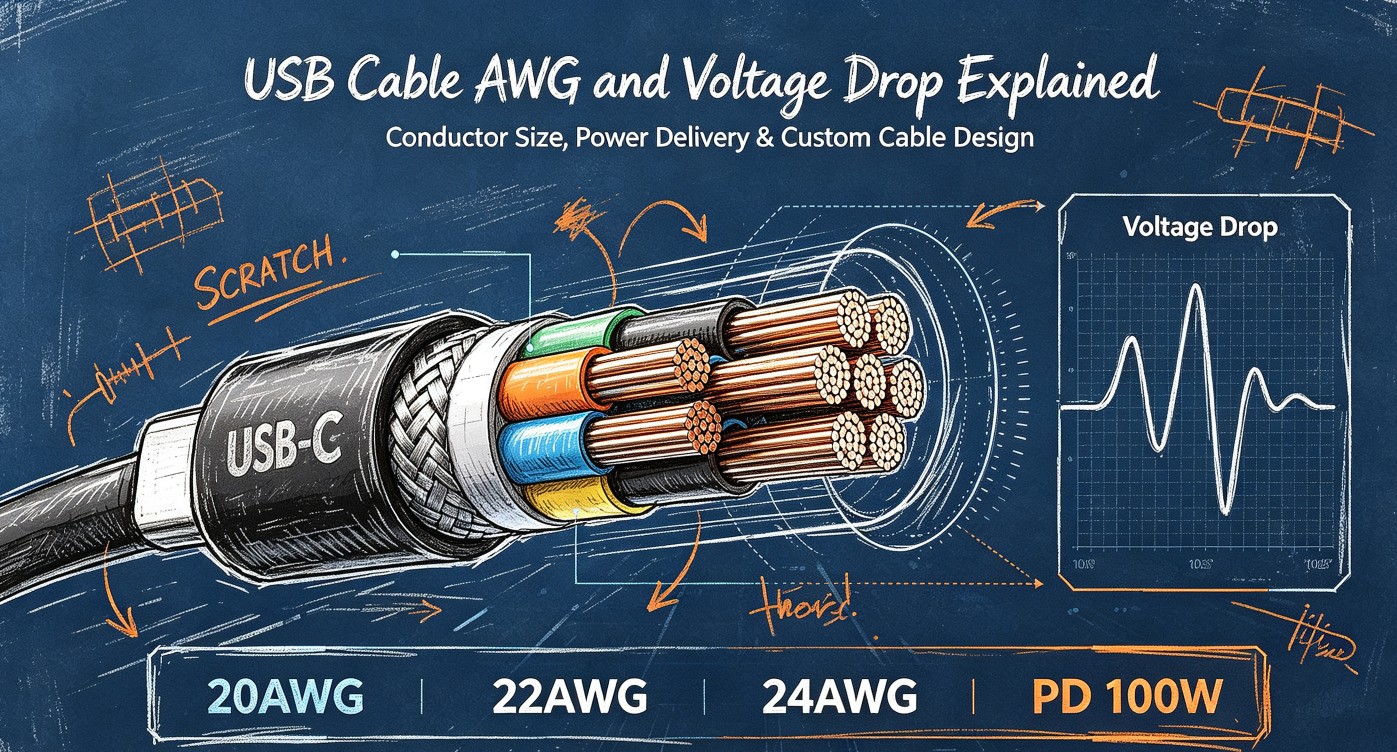
USB Cable AWG and Voltage Drop Explained
AWG wire gauge directly affects power delivery and voltage drop in USB cables. This engineering guide explai…
Technical & Testing
2026-09-17
USB Cable AWG and Voltage Drop Explained
AWG wire gauge directly affects power delivery and voltage drop in USB cables. This engineering guide explai…
 OEM & Sourcing Guides
2026-09-04
How USB-IF Certification Impacts Your Wholesale USB Cable OEM Orders
What is USB-IF certification and why it matters for OEM wholesale buyers. Learn certification scope, complia…
OEM & Sourcing Guides
2026-09-04
How USB-IF Certification Impacts Your Wholesale USB Cable OEM Orders
What is USB-IF certification and why it matters for OEM wholesale buyers. Learn certification scope, complia…
 Technical & Testing
2026-09-22
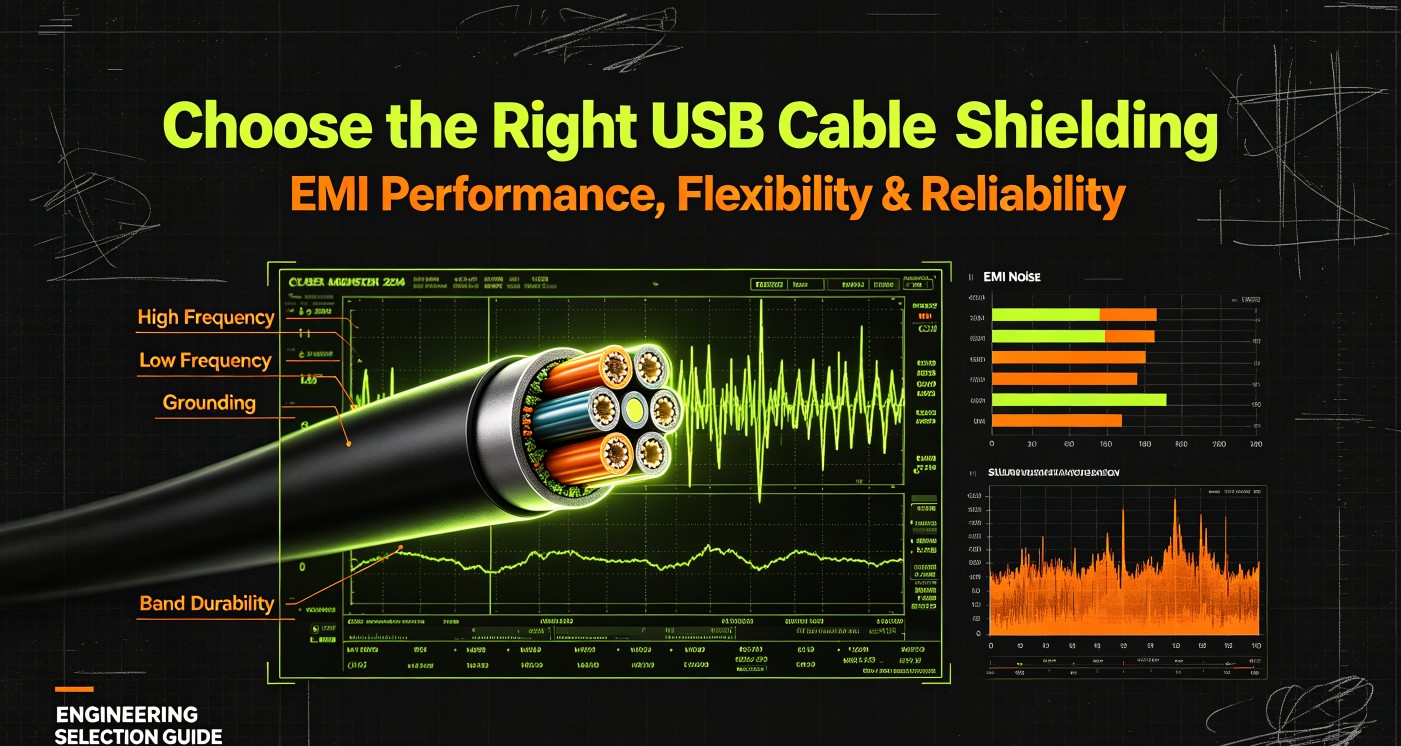
How to Choose USB Cable Shielding for Industrial & High-Speed Applications
USB cable shielding directly impacts signal integrity and EMI performance. Learn shielding types, trade-offs…
Technical & Testing
2026-09-22
How to Choose USB Cable Shielding for Industrial & High-Speed Applications
USB cable shielding directly impacts signal integrity and EMI performance. Learn shielding types, trade-offs…
Need this cable built to your specification?
Send your drawing, sample or target price — our engineers reply within 24 working hours.