## USB Cable Bend Test Standard
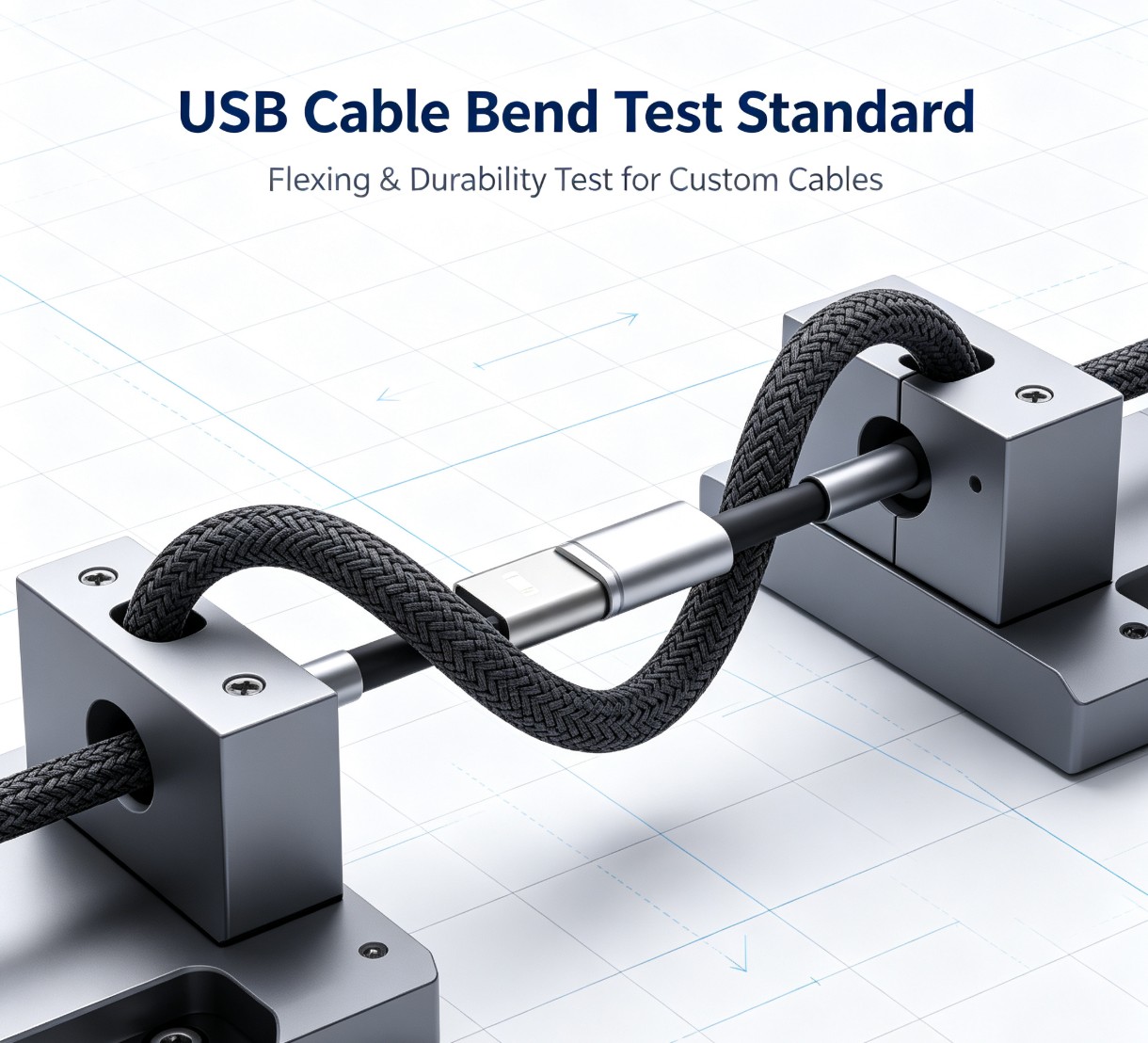
USB cable bend (flexing) test is one of the most critical reliability tests for charging and data cables. It verifies how many bending cycles a cable can withstand before conductor breakage, intermittent connection or outer jacket cracking.
For OEM & custom cable buyers, bend cycle rating directly reflects product grade and service life. Low-quality cables often fail within hundreds of cycles, while industrial-grade custom cables can pass tens of thousands of flexes.
### Common Test Standards
1. IEC 60227 / IEC 60245
General rubber and PVC insulated cable flexing baseline, widely referenced for low-voltage power cords.
2. USB-IF compliance test
For certified USB cables, includes repeated bending test to ensure stable data transmission and power delivery after cycles.
3. Internal manufacturer specification (most common for custom projects)
Most cable factories define custom bend test parameters according to buyer requirements: bending angle, bending radius, test speed and pass/fail rules.
### Key Test Parameters
- Bending radius: Usually 3~8 mm, smaller radius = harsher test
- Bending angle: ±90°, ±180°
- Bending speed: 30~60 cycles per minute
- Load: Some tests add a small weight hanging on the cable end
- Ambient temperature: Room temperature 23±5℃, or high/low temperature aging combined flex test
Typical Cycle Grade Reference
- Consumer basic cable: 1,000 – 3,000 cycles
- Normal braided charging cable: 5,000 – 10,000 cycles
- High durability / industrial custom cable: 20,000 ~ 50,000+ cycles
>
> Note: Cycle numbers are only comparable when test radius and angle are identical. A cable passing 10,000 cycles under 8mm radius may fail quickly under 3mm sharp bend.
### Acceptance Criteria (Pass Condition)
The cable is considered passed only if all below requirements hold after completing target cycles:
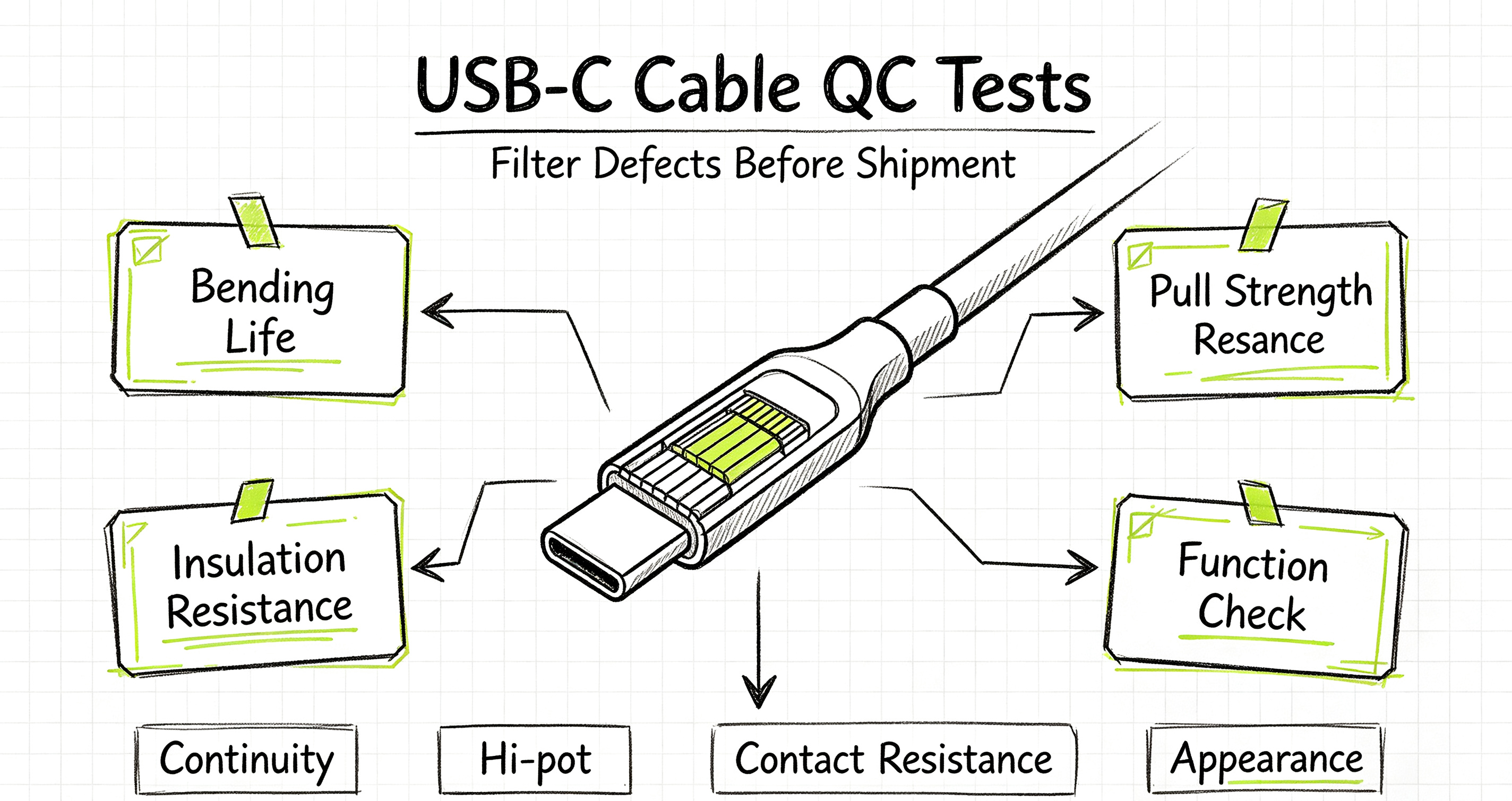
1. No open circuit or intermittent disconnection of inner conductors
2. No short circuit between conductors or shield
3. Outer jacket without crack, split or insulation exposure
4. Shield continuity remains stable (for shielded data cables)
5. Data transfer / charging function works normally
### How To Improve Cable Bend Durability
- Use multi-strand fine copper conductor (0.08mm or 0.05mm thin copper) instead of thick single wire
- Select flexible TPE / TPU jacket material, avoid rigid hard PVC
- Optimize cable OD and internal structure, add filler for stress dispersion
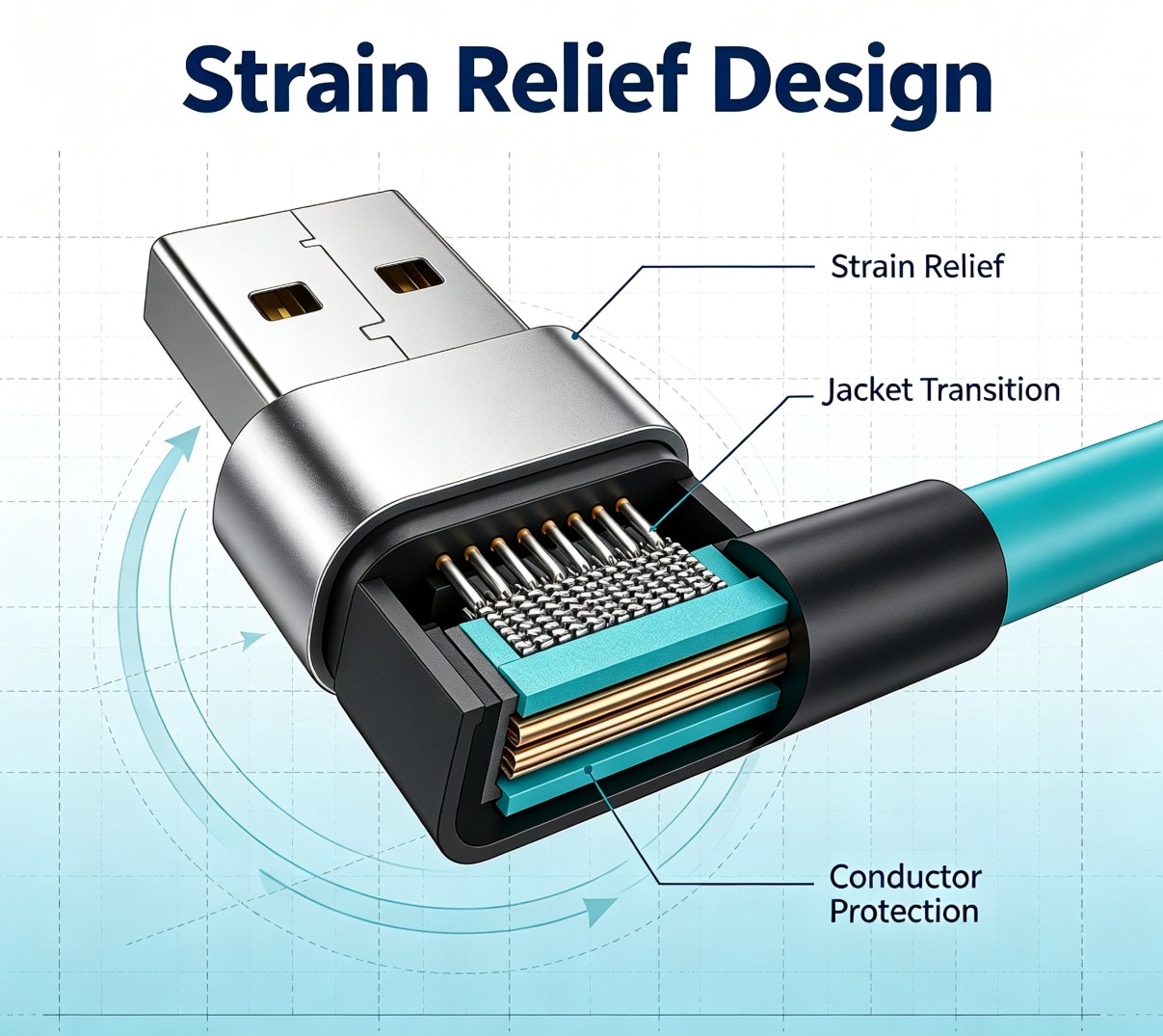
- Reinforce the cable strain relief at plug entry point (the most frequent failure position)
### What We Offer
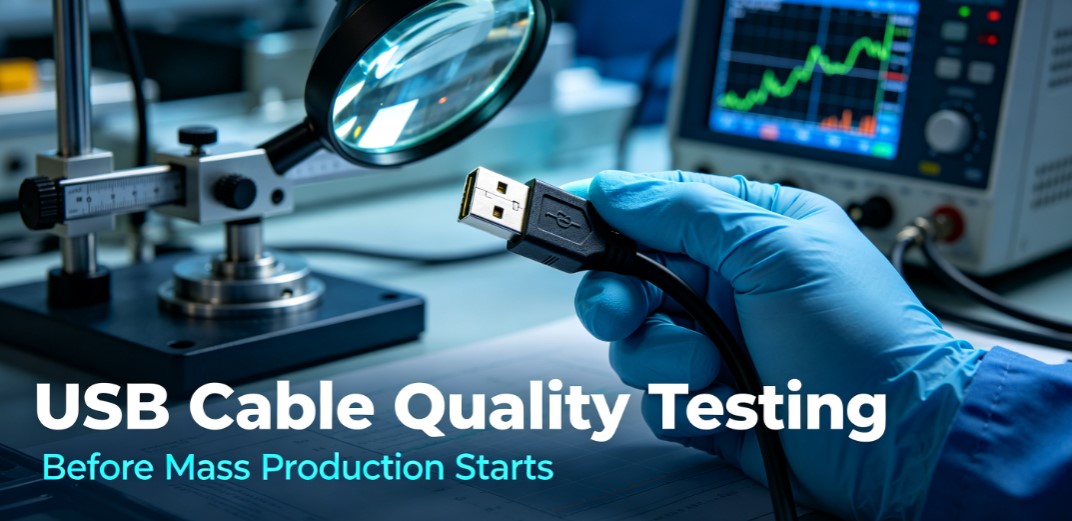
LINKSTRONG / BEARKOO supports custom bend test requirements for your cable project. Our QC lab can run flex testing according to your specified cycles, bending radius and temperature conditions.
We have delivered many durability-critical projects. Check our custom USB data charging cable case study.
If you are unsure which durability specification fits your project, contact LINKSTRONG custom cable team to share your specification. Before issuing RFQ, read our cable assembly RFQ guide.