For US brands, the practical question is not whether the directive applies to a cable sold on its own. It is which cable you now have to ship, and what your packaging and documentation have to say about it.
What changed on 28 April 2026
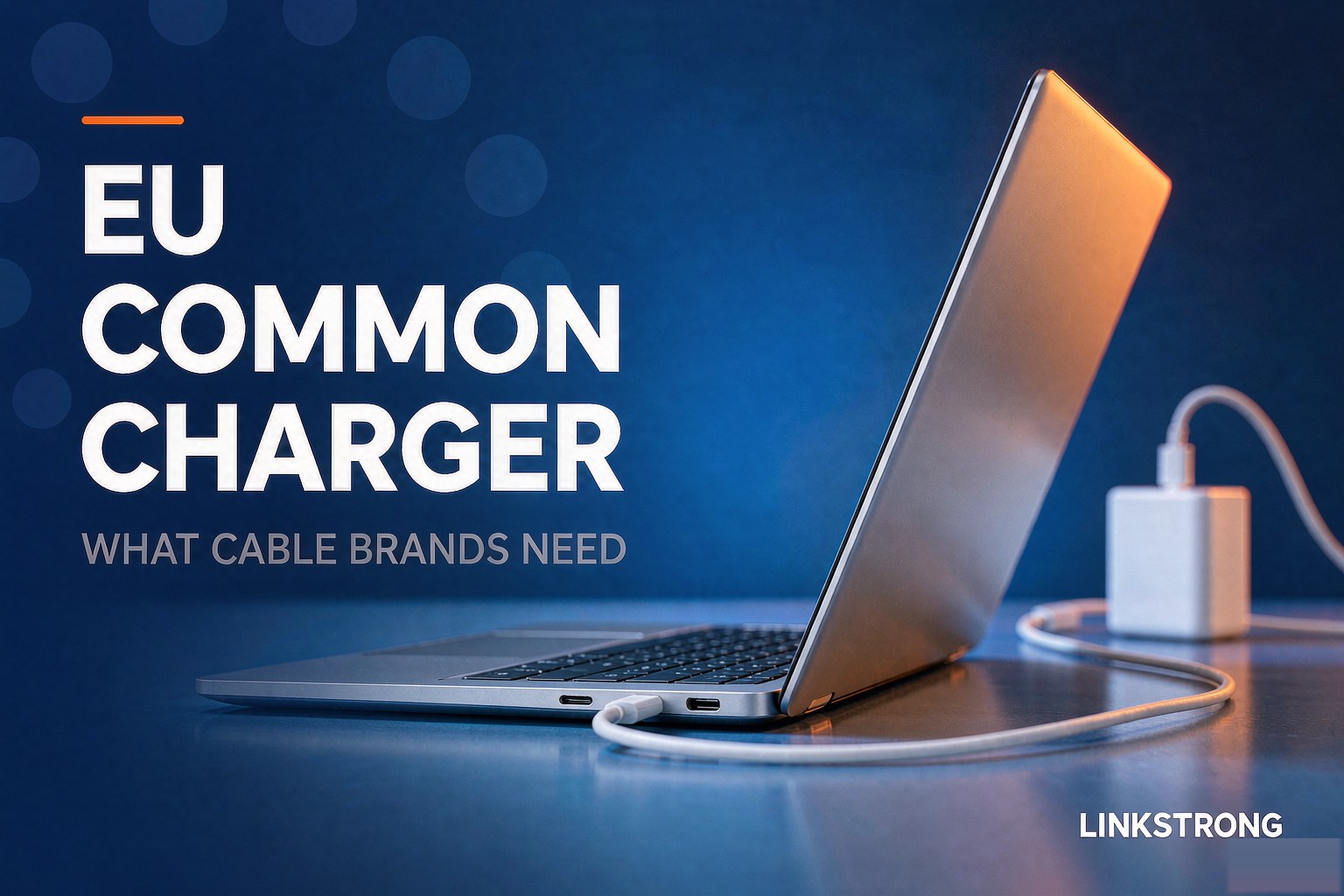
Directive (EU) 2022/2380 amended the Radio Equipment Directive to introduce the common charger requirements. Since 28 December 2024 they covered mobile phones, tablets, e-readers, earbuds, digital cameras, headphones, headsets, handheld game consoles, portable speakers, keyboards, mice and portable navigation devices. From 28 April 2026 laptops are added.
Four requirements matter for a cable brand:
- A USB-C receptacle on the device, built to EN IEC 62680-1-3, for anything charged by wire.
- USB Power Delivery for devices charging above 5V, 3A or 15W, per EN IEC 62680-1-2.
- Unbundled sale, so the buyer can purchase the device without a charger.
- Labels and pictograms stating what power the device needs and whether a charger is in the box.
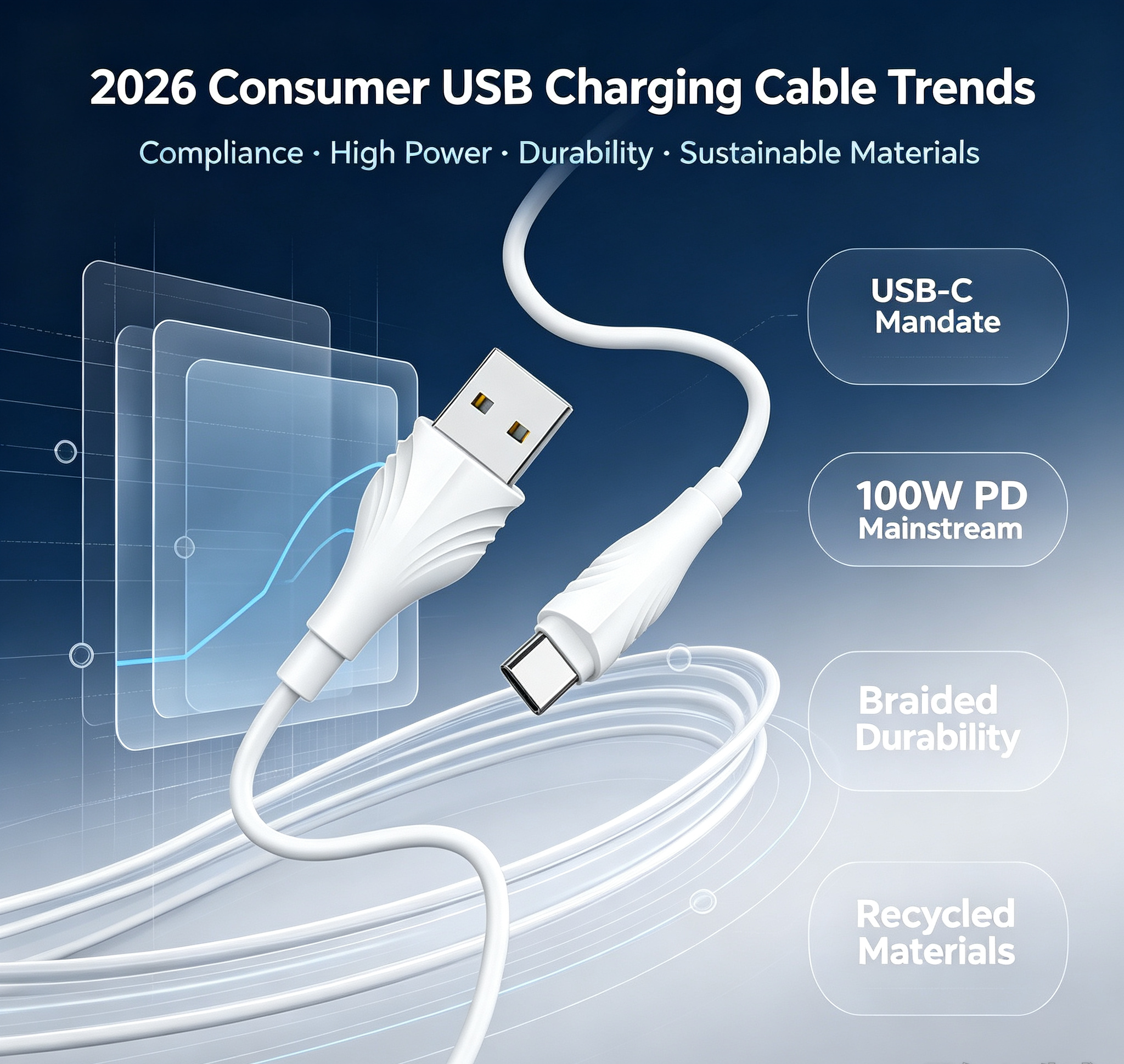
The directive regulates devices, not loose cables. But every device in scope now charges through a USB-C port, and that is the demand signal your 2027 range should be built around.
Why 100W and 240W cables become the default SKU
A laptop charger runs at 45W to 140W, and the cable in the box has to carry it. That shifts the volume centre of gravity from 60W assemblies to 100W and 240W assemblies, with the electrical consequences that follow.
- 20AWG on the power pair, not 22AWG, once you are above 60W.
- An e-marker in the connector, so the charger negotiates 5A rather than defaulting to 3A.
- Lower voltage drop budget, because a 100W laptop will derate visibly on a cable that loses 0.8V.
- Higher temperature-rise headroom, since the same jacket now sits around a hotter conductor.
If your EU assortment still leans on 60W 22AWG builds, the mix is mispriced for the market it is selling into. The construction differences are set out in our USB-C cable power ratings guide, and the chip side in the e-marker explainer.
Unbundling makes the cable the accessory that ships
When the charger comes out of the box, the cable often stays in. That is an opportunity and a trap.
The opportunity is accessory revenue: a device sold without a charger still needs a cable, and buyers increasingly look for one rated above the device's draw. A 240W cable bundles cleanly with a 140W laptop.
The trap is compatibility claims. Under the directive, devices that exceed 15W must implement USB PD, and any additional charging protocol a brand adds has to leave the USB PD function fully working with any compliant charger. If your cable's marketing implies a proprietary fast-charge mode that only works with your own charger, that claim needs checking against the device vendor's documentation, not against your own test bench.
Labels, pictograms and the instruction sheet
The pictogram requirement is specific: a graphic at least 12.8mm by 9.3mm showing whether a charging device is included, printed on the packaging or applied as a sticker, and shown near the price in distance selling. A second label states the minimum watts required and the watts needed for maximum speed.
For a cable-only SKU the obligation sits with the device, but the label is where retail buyers look, and a private-label program that supplies the whole kit usually owns the artwork. Two things to get right:
- Print readability at 12.8mm. Thin reversed-out type disappears on a matte box.
- Consistency between the box, the manual and the listing. Marketplaces compare them, and so do customs.
GPSR is the other half of the compliance file
Since 13 December 2024 the General Product Safety Regulation has required an EU-based responsible economic operator on the product or its packaging, plus a traceability address and batch identification. For a US brand shipping into the EU through a marketplace, that means a named EU entity, an address a consumer can write to, and a batch code that ties back to a production run.
Cables are low-risk products, but they are not exempt from the paperwork. If your current packaging carries only a US address, it is not ready for EU retail regardless of how good the cable is.
What to change in the next product cycle
- Re-base the range at 100W and 240W. Keep 60W for accessory and promotional lines only.
- Add an e-marker to every assembly above 60W, and document the reported current in the spec sheet.
- Rebuild the packaging artwork with the pictogram, the power label and an EU responsible-person address.
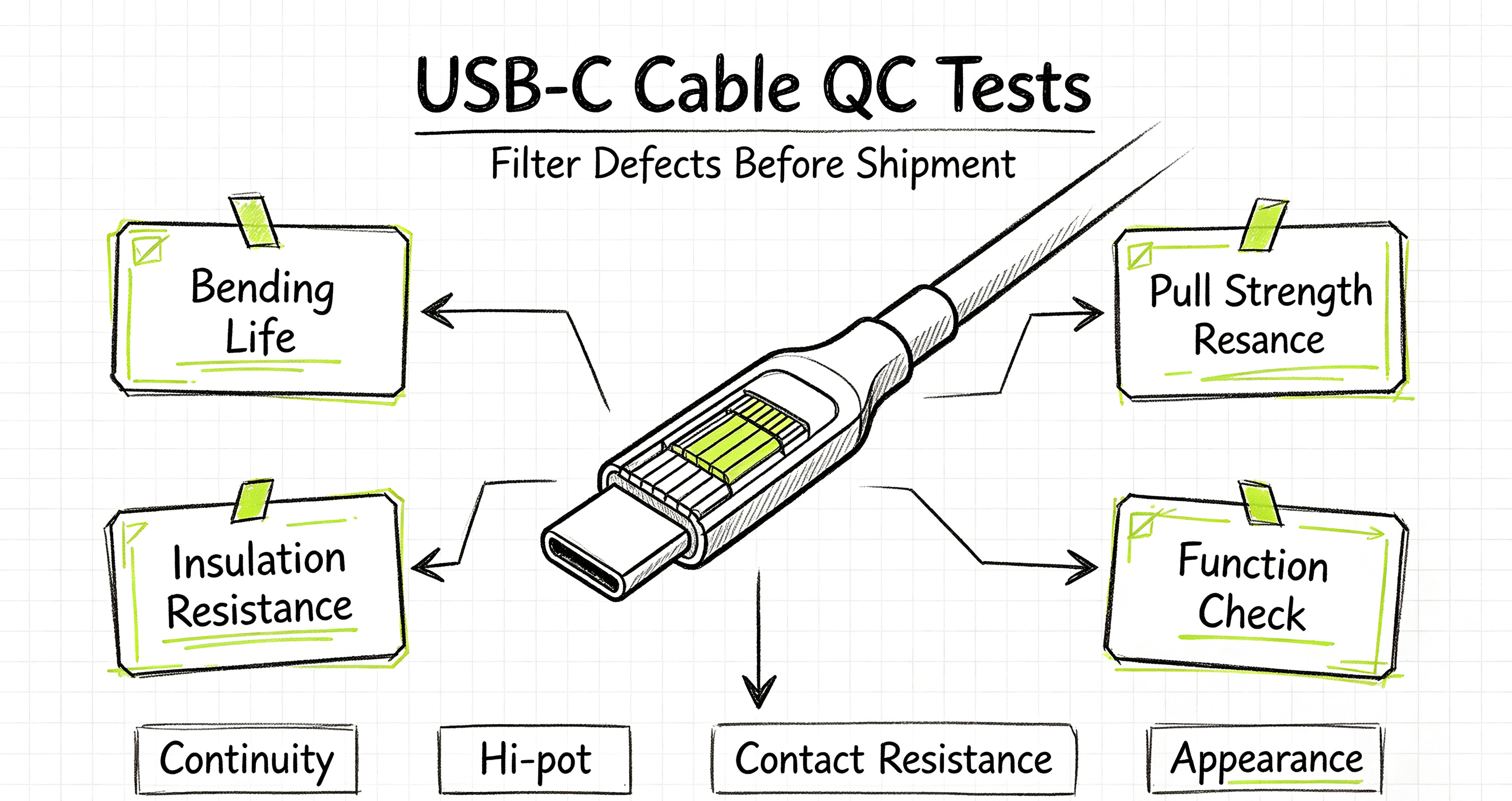
- Update the test file so temperature rise is measured at the rated current, not at 3A.
- Check the certification story against the market. Our comparison of UL 9990, USB-IF and MFi explains which mark a European buyer will ask for and which one they will not.
None of this is exotic. It is a re-spec of the conductor, the chip and the carton, done once, before the range locks. Brands that do it in the design phase absorb the cost quietly; brands that discover it at the port pay for new artwork, new cartons and a delayed container.
If you are rebuilding a cable range for the EU and want the construction, e-marker and labelling checked in one pass, send the current spec sheet through the contact page and we will return an annotated version with the gaps marked.