What an E-Marker Actually Does
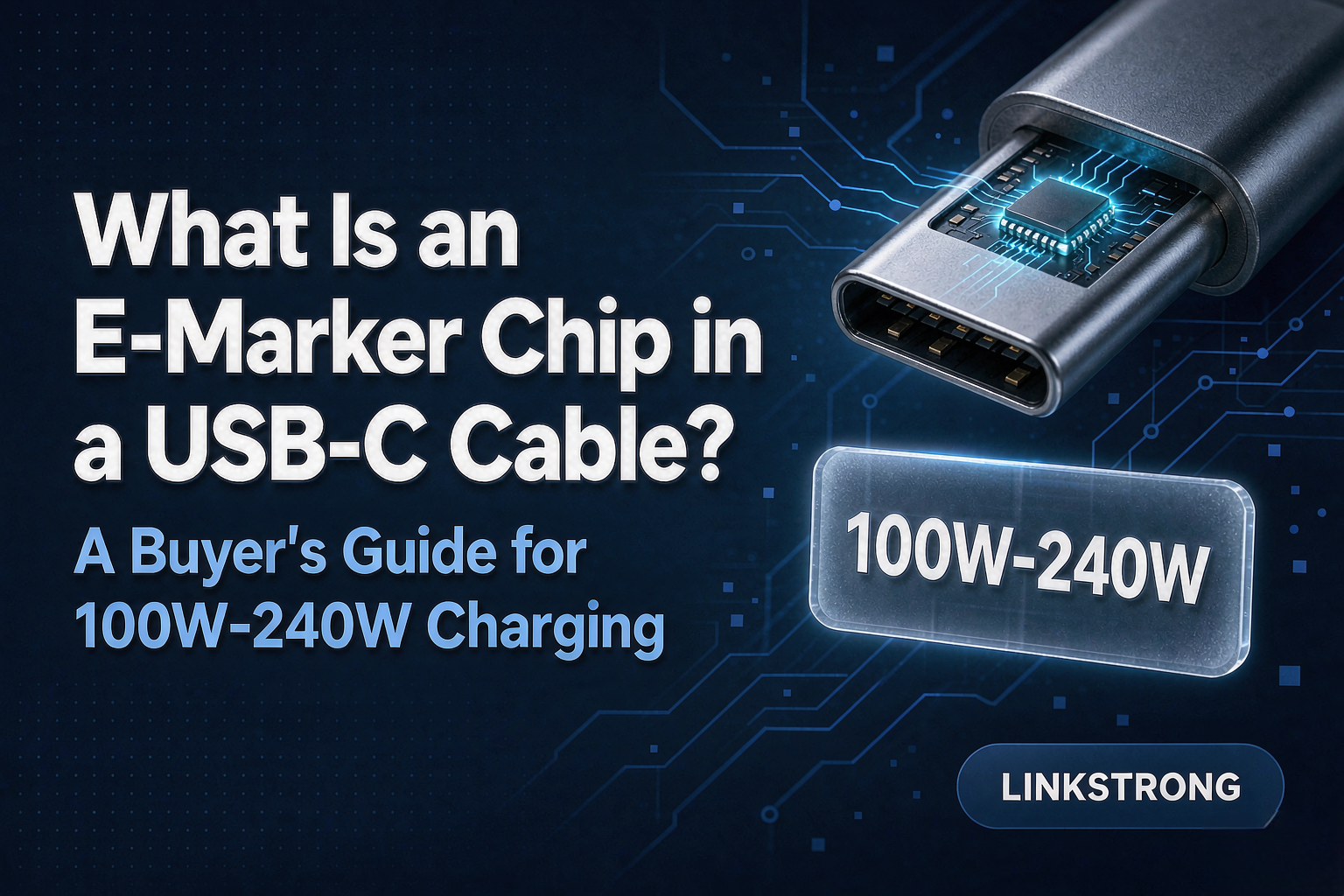
An E-marker (electronic marker) is a small chip moulded into one of the USB-C connector plugs. Over the CC (configuration channel) line, it broadcasts the cable's capabilities to the charger and the device: maximum current, supported voltage tiers including the 28V/36V/48V EPR steps, data speed class, and cable type.
The negotiation works like this. When a charger and device connect, they first talk at 5V. Before the charger offers more than 3A or any EPR voltage, it must read the cable's E-marker. If the chip reports a 5A rating, the charger is allowed to offer up to 48V × 5A = 240W. If the chip is missing or reports only 3A, the charger holds back regardless of how thick the copper inside the cable actually is.
Two things follow from this, and both matter commercially:
- The chip sets the limit, not just the wire. A cable with 16AWG conductors and no E-marker is still a 60W (3A) cable as far as PD is concerned.
- The chip is the cheapest component to fake and the easiest to verify. Which makes it a useful test of how honest a supplier is about the rest of the specification.
When a Cable Needs One — and When It Doesn't
The USB-IF rules are simple:
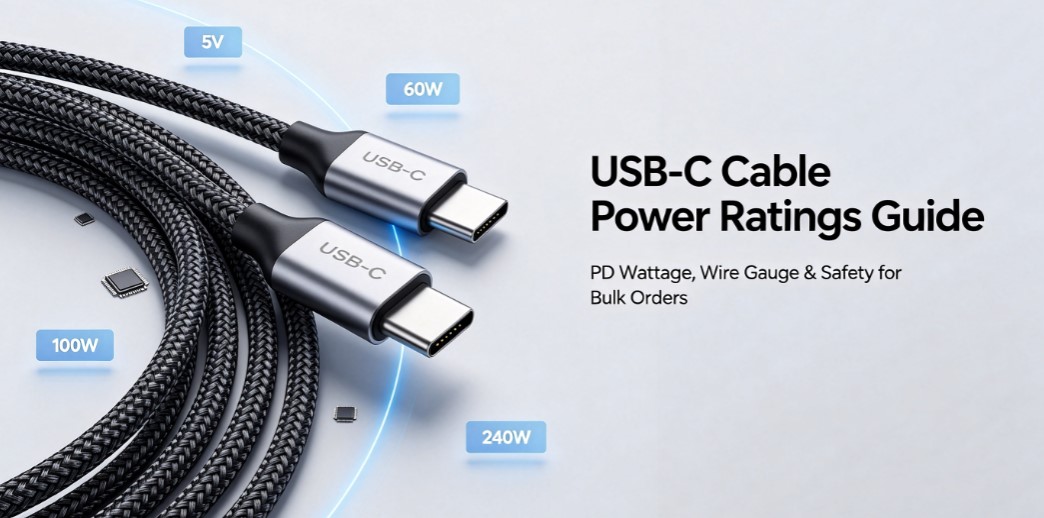
- Up to 60W (20V × 3A) — no E-marker required. This covers most phone-charging cables, including every USB-A to USB-C model.
- Above 3A, or any use of the 28V/36V/48V EPR tiers — an E-marker is mandatory. Every 100W and 240W USB-C to USB-C cable needs one.
For a brand buyer this gives you a quick sanity check. If a supplier offers you a "100W USB-C cable" at a price that is identical to their 60W version, ask where the E-marker is. A genuine 5A-class cable costs more than a 3A cable because of the chip, the heavier copper and the extra assembly step. Identical pricing usually means the wattage claim is fiction.
How Fake or Missing E-Markers Show Up in the Field
Field failures follow a pattern, and it is worth knowing what your customers will actually experience:
- The laptop falls back to slow charging. A 60W cable (no chip) on a 96W MacBook charger negotiates down to a lower wattage. The user sees a charger that works, but a charge session that takes three times as long — and blames your brand, not the cable.
- EPR never engages. A cable with a 3A-only E-marker will never unlock 28V+ tiers, so "240W" printed on the box never happens. Some cheap cables even contain a chip programmed for 100W and get relabelled as 240W.
- Intermittent negotiation failures. Low-quality or recycled chips can drop the CC signal, producing cables that work on some chargers and not others — the most confusing failure mode for an end user and the most expensive one for your support inbox.
How to Verify the Claim Before You Order
You do not need a lab to separate a real 240W cable from a relabelled one. Ask the supplier for three things:
- The E-marker chip model and origin. Legitimate manufacturers can name the chip vendor and part number. Hesitation here is a red flag that reaches beyond the cable itself.
- A PD protocol analyser screenshot. A 15-minute test with a analyser or an EPR-capable charger shows the actual negotiated contract — 48V/5A or not. Ask for it on a random production sample, not a golden sample.
- The safety report. A UL 9990 certified cable has been through temperature-rise and fault-current testing at its rated load, which a mislabelled cable cannot pass. If a supplier claims 240W but has no report covering it, the claim is unverified.
Our own 240W platform went through exactly this discipline. The LS-C2C-BZ-004 zinc-alloy braided cable carries a genuine 5A E-marker and shares one construction platform across lengths and housings, which is the same platform we submitted for UL 9990 Type II testing. One verified platform beats three unverifiable claims.
The Bottom Line for US Brand Buyers
The E-marker is a $0.10 component that carries your entire wattage story. Specify it by name, verify it with an analyser sample, and make sure your safety report covers the tier you are advertising. Do that, and "240W" on your packaging is a promise you can keep; skip it, and it is a refund request waiting to happen.
For the wider context on wattage tiers, see How Many Watts Can a USB-C Cable Handle?, and for the copper side of the same story, see why wire gauge matters.