If you are sourcing USB-C charging cables for consumer electronics, power rating is one of the most critical factors you need to evaluate. Not all USB-C cables deliver the same wattage, and choosing the wrong cable can cause slow charging, overheating, product returns or even safety risks for your end customers.
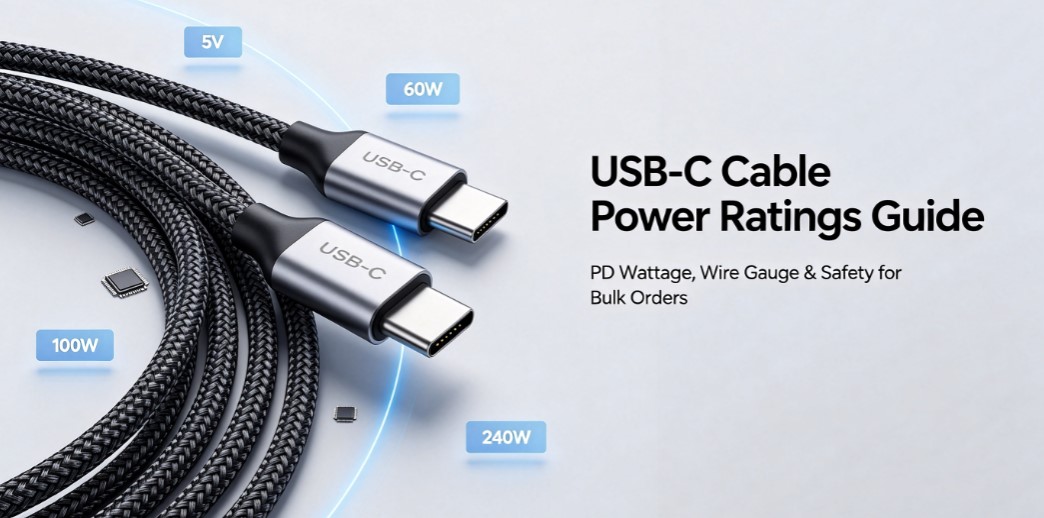
USB-C power delivery ranges widely. Basic 5V cables only support low-current charging for small accessories like wireless earbuds. Mid-range 60W cables work great for smartphones, tablets and portable gadgets, which is the most popular option for private label wholesale. High-power 100W or 240W PD cables are built for laptops and high-power portable devices, requiring thicker internal copper conductors and strict compliance testing.
The cable’s internal wire gauge directly decides its maximum safe power transfer. Thinner wires cannot carry high current, leading to voltage drop and heat build-up. For OEM orders, we always match the copper gauge according to your target wattage to ensure stable, long-term performance.
Certification also matters. If your products target EU, US or other mainstream markets, your USB-C cables need to meet relevant safety standards. Uncertified high-wattage cables will bring compliance risks when you sell on retail platforms.
When planning your bulk OEM order, confirm your end device’s charging requirement first. A 60W cable is enough for most smartphone bundles, while laptop kits require 100W PD cables. LINKSTRONG provides custom USB-C cables with customizable power ratings, outer jacket materials and private labeling for your consumer brand.
Learn more about our custom USB cable solutions
FAQ
Frequently Asked Questions
Quick answers for OEM and wholesale cable buyers.
What wattage USB-C cable should I order for my product?
Match the cable to the end device. 60W covers smartphones, tablets and small portable gadgets; 100W and 240W PD cables are built for laptops and high-power devices and need thicker copper.
Why is a 240W USB-C cable thicker than a 60W cable?
Higher wattage means higher current, and higher current needs thicker copper conductors. Thinner wires cannot carry the current safely, which causes voltage drop and heat build-up.
Do high-wattage USB-C cables need certification?
If your products target the EU, US or other mainstream markets, yes. Uncertified high-wattage cables create compliance risk when you sell through retail platforms.
Can one cable design be sold at several wattage ratings?
No. The internal construction has to match the rating printed on the packaging. We build the wire gauge to your target wattage rather than relabelling a single design.
 OEM & Sourcing Guides
2026-09-04
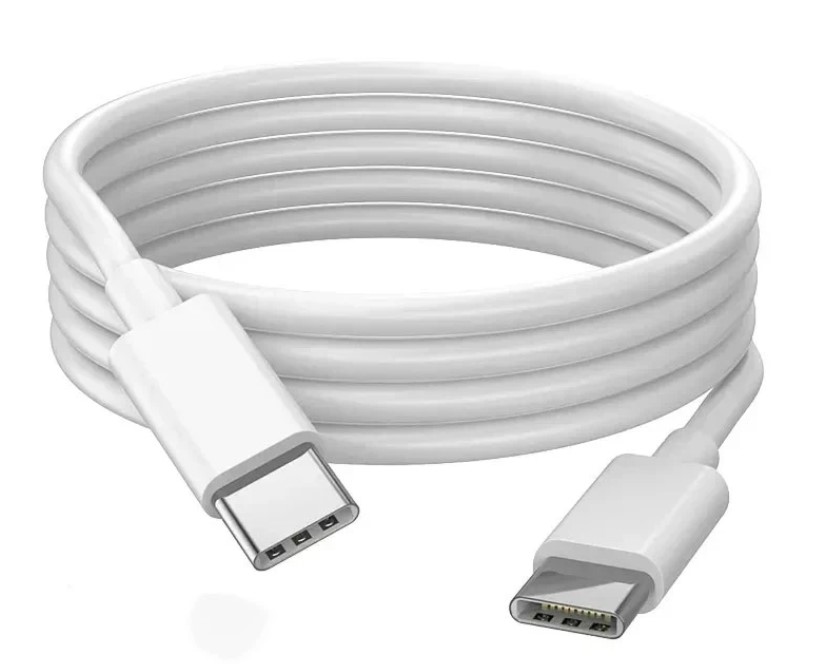
USB-C PD Fast Charging Cable: Complete Selection Guide for OEM & Wholesale Buyers
Choosing the right USB-C PD fast charging cable is critical for OEM and wholesale buyers. This guide explain…
OEM & Sourcing Guides
2026-09-04
USB-C PD Fast Charging Cable: Complete Selection Guide for OEM & Wholesale Buyers
Choosing the right USB-C PD fast charging cable is critical for OEM and wholesale buyers. This guide explain…
 OEM & Sourcing Guides
2026-09-04
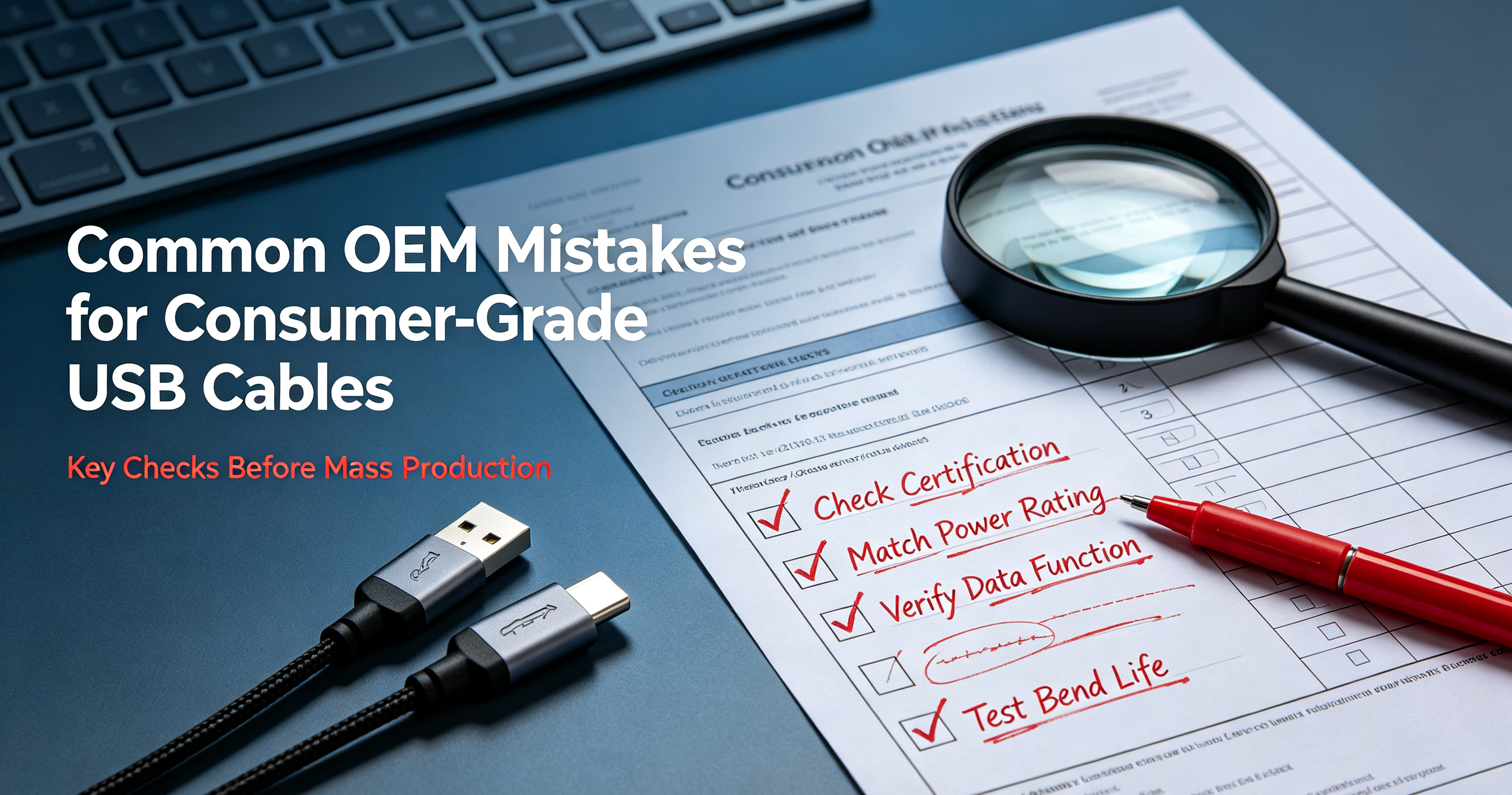
Common OEM Mistakes for Consumer-Grade USB Charging & Data Cables
Many consumer electronics brands face returns and compliance risks from poorly specified OEM USB cables. Thi…
OEM & Sourcing Guides
2026-09-04
Common OEM Mistakes for Consumer-Grade USB Charging & Data Cables
Many consumer electronics brands face returns and compliance risks from poorly specified OEM USB cables. Thi…
 Technical & Testing
2026-09-21
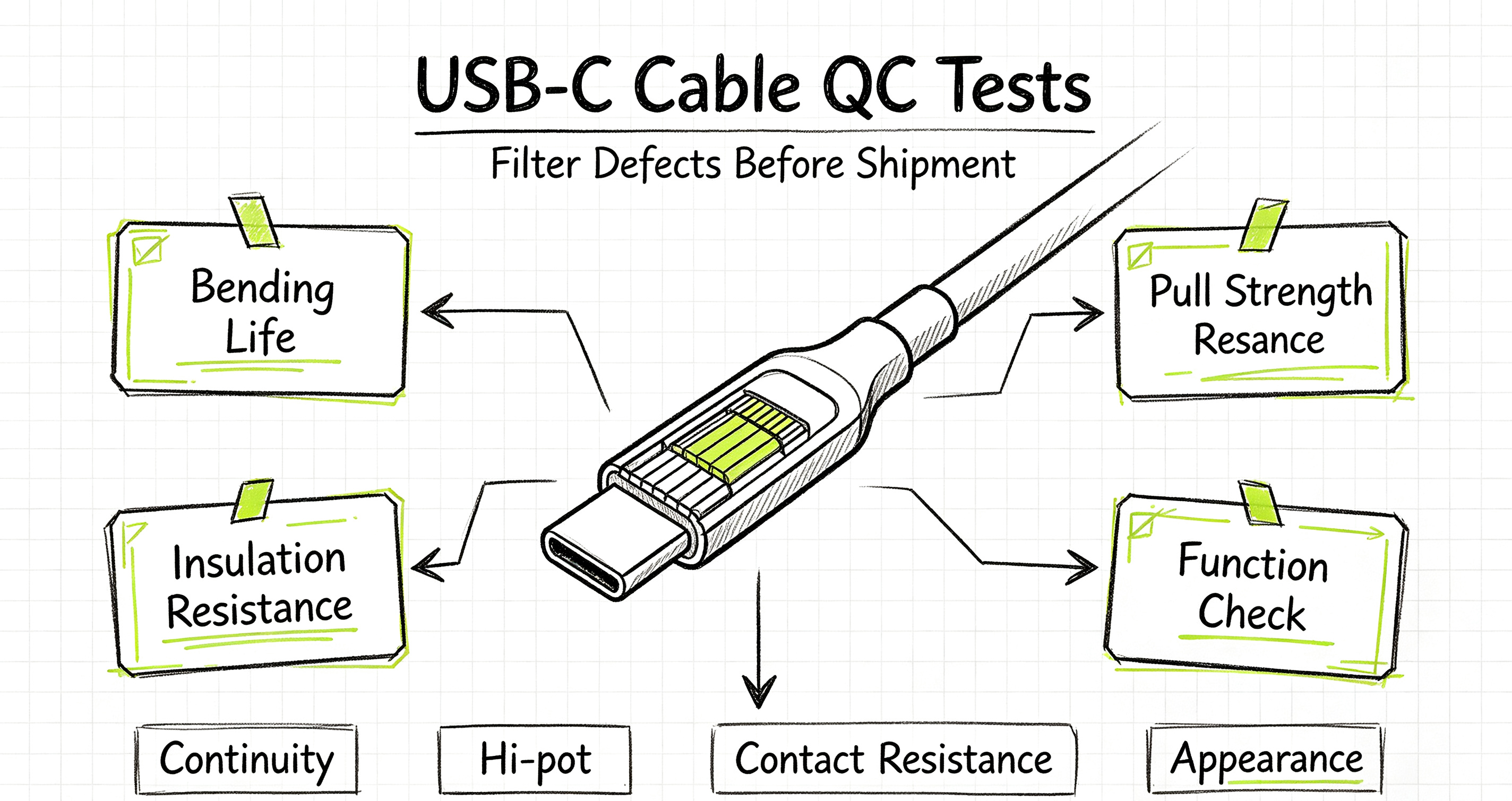
USB-C Cable Quality Control: Key Tests Every Batch Should Pass
This article covers essential electrical, mechanical and environmental QC tests for USB-C data charging cabl…
Technical & Testing
2026-09-21
USB-C Cable Quality Control: Key Tests Every Batch Should Pass
This article covers essential electrical, mechanical and environmental QC tests for USB-C data charging cabl…
Need this cable built to your specification?
Send your drawing, sample or target price — our engineers reply within 24 working hours.