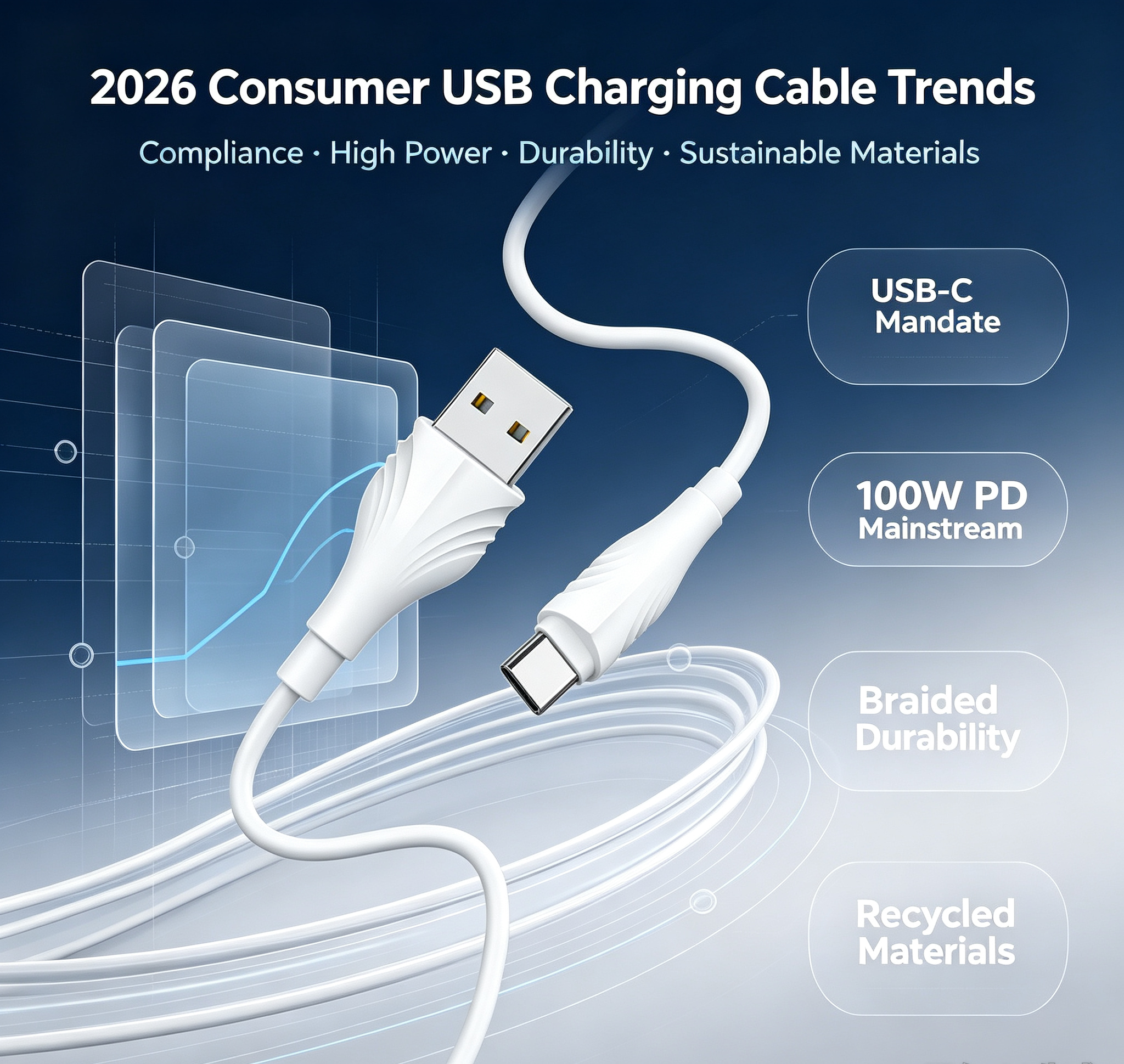
This is our 2026 read on the US USB cable market: what is changing, what is pressuring margin, and what it means for the way you specify and source.
The Connector Transition Is Now the Main Variable
The move of Apple's flagship phones to USB-C pulled the largest single demand pool in the US market across to the USB-C family. The effects are uneven:
- USB-C to USB-C is the growth SKU and now the default assumption for phones, tablets and laptops.
- USB-C to Lightning remains high-volume but is on a slow decline as the Lightning installed base ages. It is still the right SKU for Apple-heavy audiences, and it carries the extra cost of MFi certification.
- USB-A to USB-C survives at the budget end, tied to the large base of older chargers and vehicle ports.
- USB-A to Lightning is fading for new programmes.
The commercial consequence is that a range built around Lightning will lose share over the next two to three years, while a range built only around USB-A will look outdated now. The defensible structure is a USB-C-led range with a maintained Lightning SKU — which is exactly what we mapped in USB-C to Lightning vs USB-C to USB-C for the US market.
Power Ratings Are Moving Up the Stack
Two pressures are pushing average wattage higher:
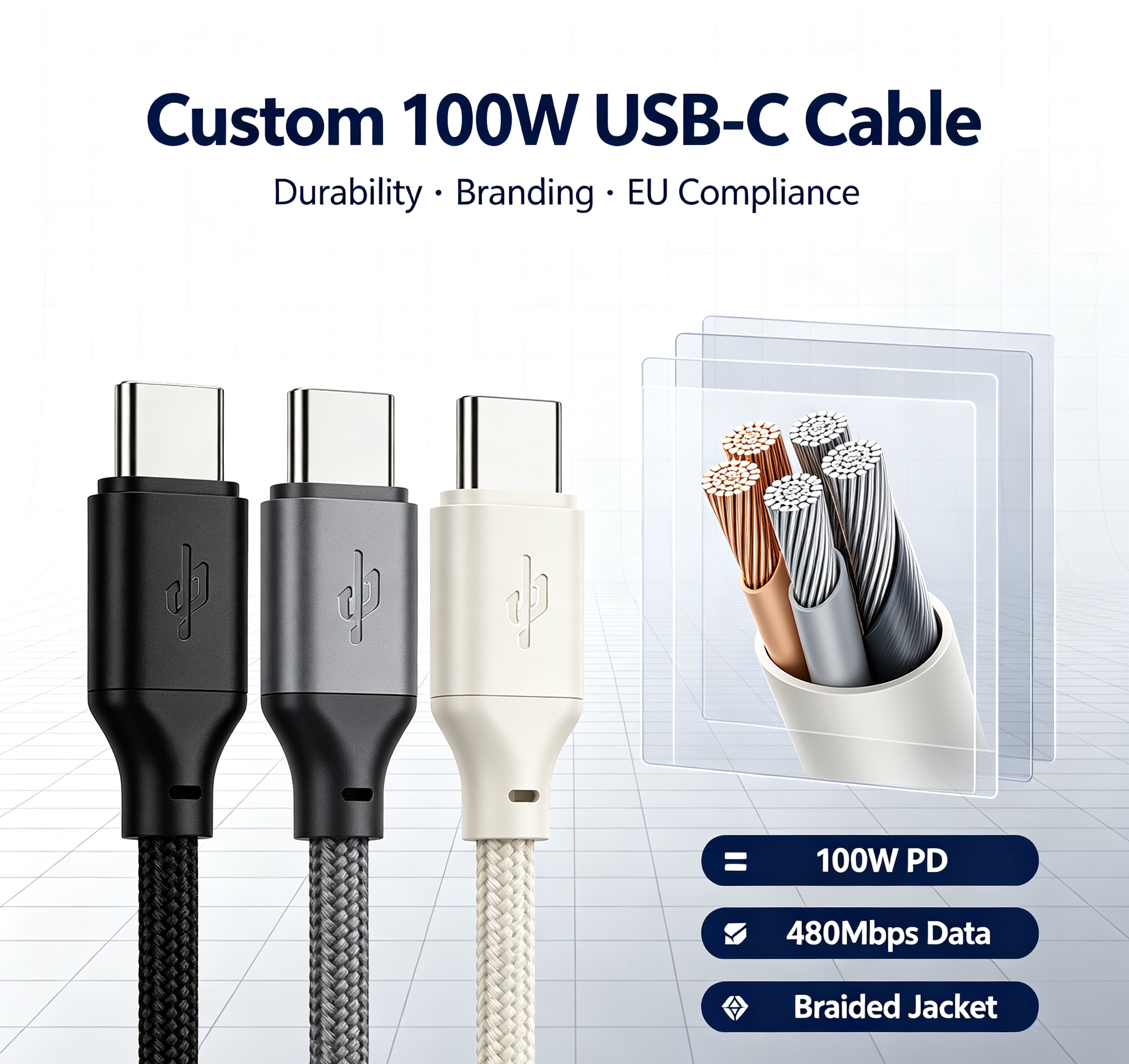
- Laptop-class charging over USB-C. 100W PD is now standard rather than premium, and Extended Power Range (140W–240W) is spreading beyond flagship laptops.
- E-marker chip adoption. Because a cable above 3A must carry an E-marker, the chip has moved from a premium feature to a baseline requirement in the mid and upper tiers.
For buyers this means the 60W tier remains the volume product for phone bundles, while the 100W tier is the growth margin product. The cost and compliance implications of specifying each tier are set out in how many watts a USB-C cable can handle.
Duty Has Become a First-Order Cost Question
The most significant change to US cable economics in this cycle is not manufacturing cost — it is duty. USB and charging cables generally classify under HTS heading 8544, and Chinese-origin goods face the general rate plus Section 301, with Section 232 derivative duties applying where the construction falls inside the current scope. The elimination of the $800 de minimis exemption means even small shipments now require formal entry and duty.
The practical effect is that a cable with a modest FOB cost can carry a duty load that materially changes the retail breakeven. Buyers who still model landed cost on FOB price alone are underpricing their SKUs. The full structure, including how freight and fees enter the calculation, is in importing USB cables to the US.
Durability Complaints Are Being Regulated Away
The most expensive quality complaint in this category — "it stopped working after two months" — is now a compliance matter as well as a returns matter:
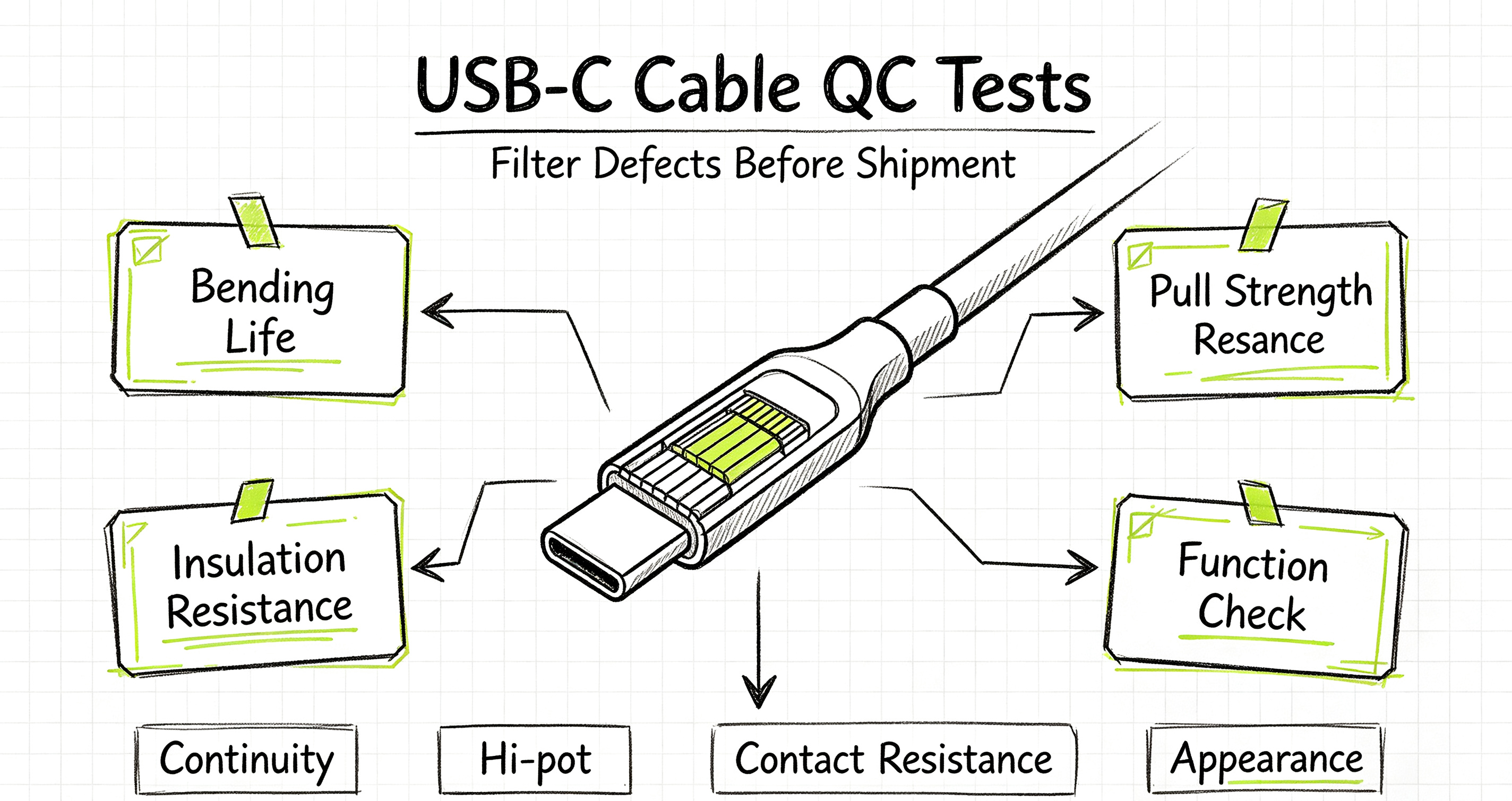
- Amazon US requires a UL 9990 report for Type-C cables, covering flame performance, flexing, temperature rise, dielectric withstand and fault current.
- Lightning products need MFi, and non-certified Lightning listings are removed.
- Retail buyers increasingly treat UL 9990 as a vendor onboarding requirement rather than a preference.
This raises the entry cost for a new SKU (testing is charged per product design) but it also raises the floor for everyone, including the cheap competitors whose cables used to undercut a compliant product. For buyers, the shift is favourable: certification becomes a competitive moat rather than a cost burden. Review our UL 9990 compliance checklist before your next programme.
Channel Mix: E-Commerce Sets the Specification
Amazon remains the specification-setter for US consumer cables. Its platform rules drive length conventions (feet), pack configurations (3-packs are the volume format), packaging requirements, and the compliance file. Two trends follow from that:
- Search behaviour defines product naming. US shoppers search by length in feet and wattage — "usb c cable 6ft", "100w usb c cable". Products named differently lose the click even when ranked. See the Amazon sourcing checklist.
- Return rate, not unit cost, drives profitability. Certified cables return far less often, and in a commodity category where the spread between two suppliers' FOB prices is a few cents, returns decide the margin.
Sustainability and Material Choices
US buyers are incrementally asking about PVC alternatives, recycled packaging and reduced plastic use. The honest position for 2026 is that this is a differentiator for brands with an environmental story, not yet a volume driver. Where it does matter commercially is packaging: retail-ready paperboard that satisfies Amazon's labelling rules and doubles as a retail box reduces both material waste and dual-inventory cost.
What This Means for Buyers in 2026–2027
Three moves follow from the trends above:
1. Rebalance the range to USB-C. Make USB-C to USB-C the volume SKU, keep a certified Lightning SKU for the Apple base, and shorten Lightning replenishment cycles so you are not holding ageing inventory.
2. Specify 100W as the growth tier, 60W as the volume tier. Match the conductor gauge and E-marker to the rating, and quote lengths in feet.
3. Build the compliance and duty cost into the price from day one. A UL 9990 report and, for Lightning, MFi testing are fixed pre-launch costs; duty is a per-unit cost. Both belong in the model before the first purchase order.
Getting Ahead of the Shift
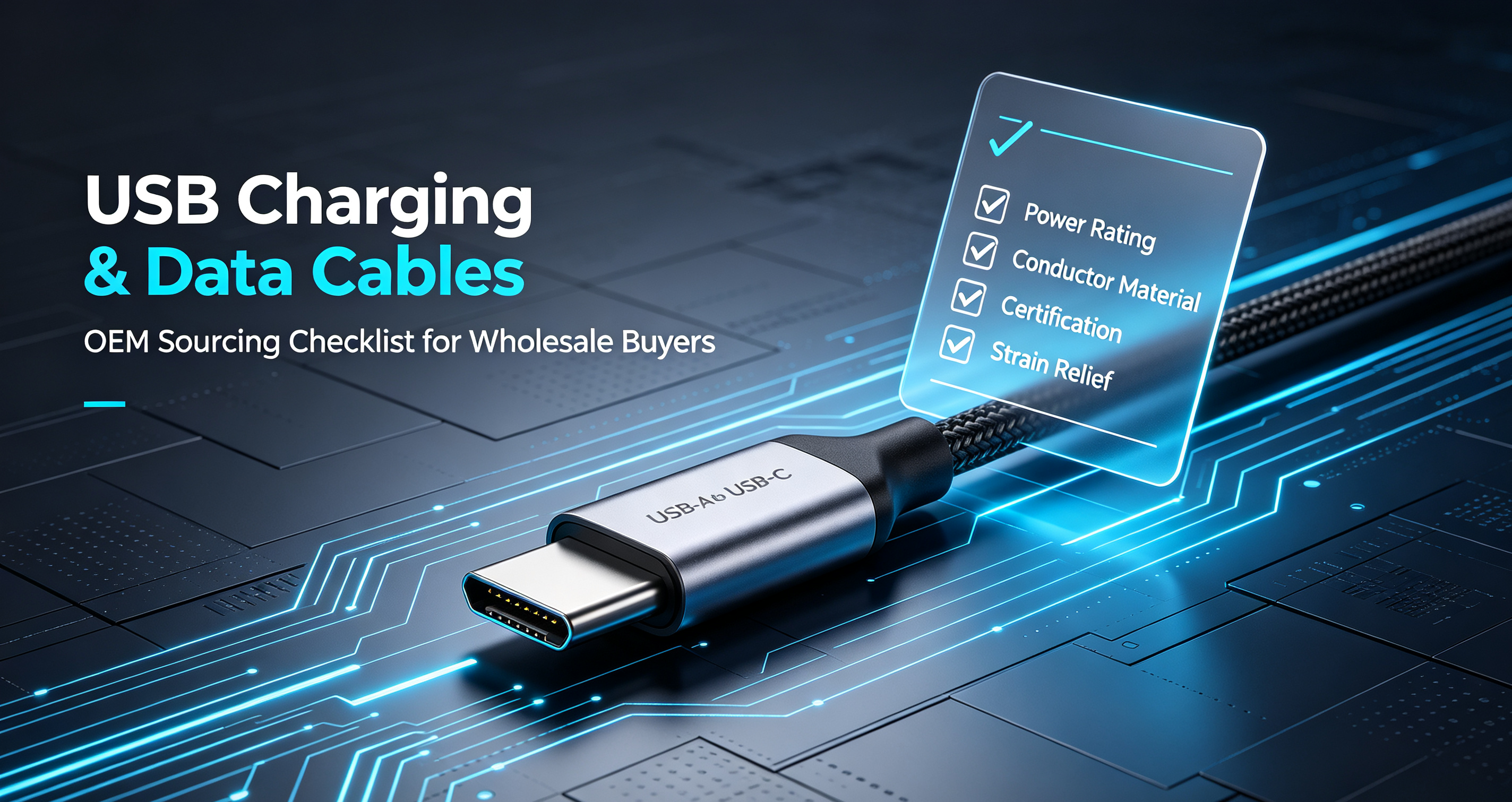
LINKSTRONG supplies the US market with USB-C and Lightning cable families built to US specification — lengths in feet, wattage matched to conductor gauge and E-marker, and documentation for UL 9990, MFi, FCC and Prop 65 prepared alongside tooling. If you are planning a 2026–2027 range, send us your target SKUs and volumes and we will map certification, landed cost and lead times before you commit. You may also want our OEM sourcing checklist for wholesale buyers.