What Each Program Actually Is
The three certifications come from three different kinds of organizations, and that explains almost everything about how they work:
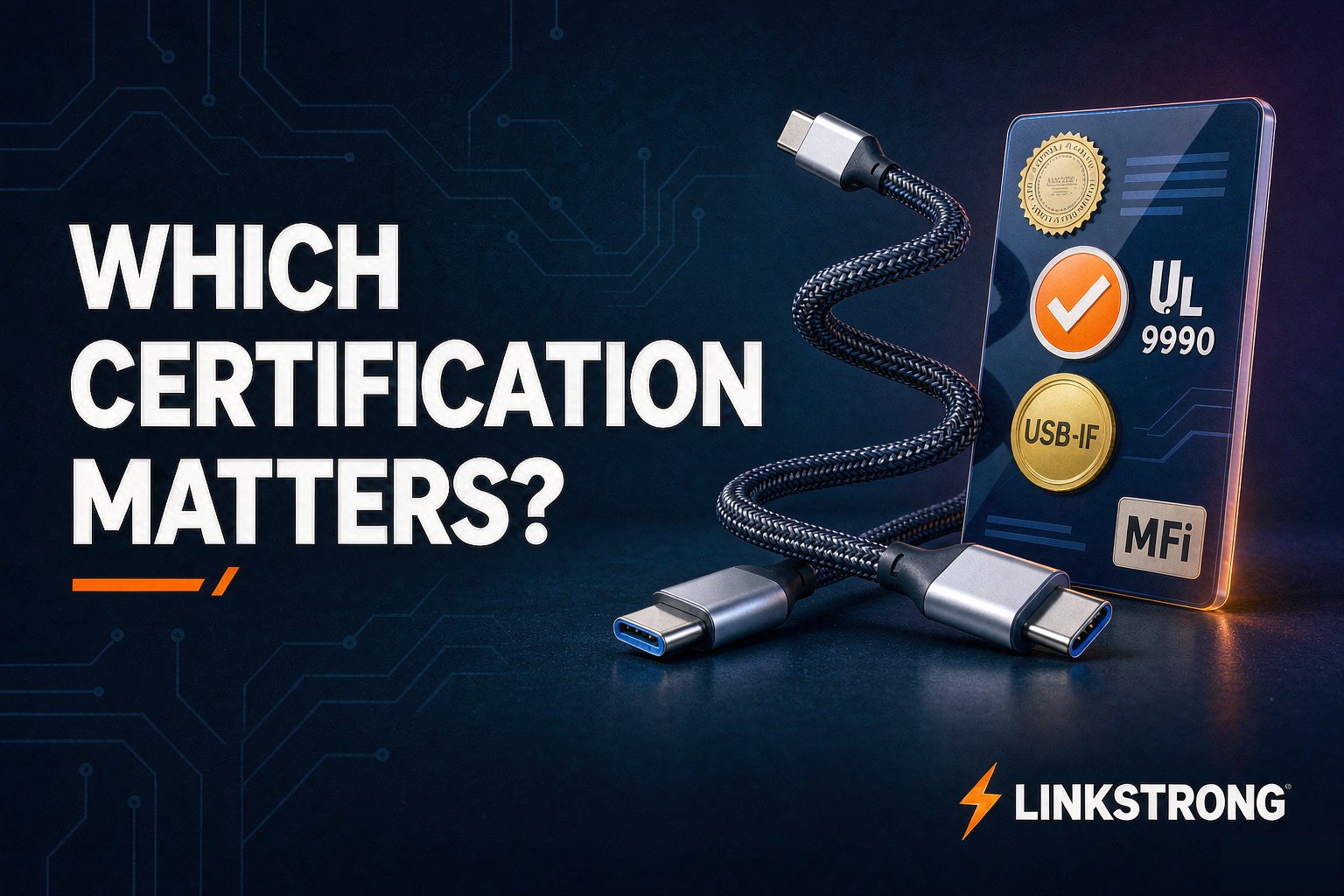
- UL 9990 is a safety test standard published by UL. It covers physical and electrical safety — temperature rise, dielectric strength, crush, flex, pull, flammability, and abnormal operation. It says nothing about interoperability or branding.
- USB-IF certification is the compliance and interoperability program of the USB Implementers Forum, the industry consortium behind the USB spec. It checks electrical performance against the USB-C specification, including power delivery signaling, and permits the use of USB logos.
- MFi is Apple's licensing program. It covers both technical compliance and, critically, a license: selling Lightning connectors for Apple devices without it is an IP violation, not just a quality gap.
If you are deciding where UL 9990 fits, our detailed guide to UL 9990 certification for US cable buyers walks through the test items and report structure in depth.
Where the Programs Overlap — and Where They Do Not
There is real overlap in electrical testing, which is why factories sometimes blur the boundaries. All three care about whether the cable carries its rated current without overheating. Beyond that, the goals diverge:
- UL 9990 answers: can this cable be sold safely? Retailers and marketplaces increasingly ask for it because it shifts liability risk away from their shelf.
- USB-IF answers: does this cable behave correctly with every device? It is the only program that validates PD e-marker behavior, and it is the gateway to using official USB-C logos on packaging.
- MFi answers: may you legally connect to Apple devices? For Lightning products it is non-negotiable; for USB-C to USB-C cables it is generally unnecessary unless you want Apple-authorized chips for specific accessories.
Our overview of the USB-IF certification process for OEM buyers explains how sampling and logo licensing work in practice, and our MFi guide for US brands covers the licensing track for Lightning products.
Cost and Timeline Reality
Budgets and lead times differ more between programs than most buyers expect:
- UL 9990: a Type II report covering a family of similar constructions typically runs a few thousand dollars and takes several weeks, depending on how many samples and configurations you include. One well-structured report can cover an entire product family.
- USB-IF: testing fees are moderate, but the process includes sample submission to authorized labs and administrative steps that stretch timelines. Plan around two months from kickoff to listing.
- MFi: the cost is dominated less by testing than by the licensing infrastructure — membership, authorized-connector purchasing through licensed channels, and audit obligations. Only brands committed to Lightning or Apple-ecosystem products should carry it.
A Decision Framework by Product Type
For most US brand buyers the logic reduces to product category:
- USB-C to USB-C charging cables (the bulk of today's market): UL 9990 plus USB-IF if you sell through retail or want logo rights; UL 9990 alone is often enough for marketplace-only launches. Make sure e-marker content is verified either way — our e-marker chip guide explains why 5A cables fail without a correctly programmed one.
- Lightning or USB-C to Lightning cables: MFi is mandatory, full stop. Add UL 9990 if you have retail ambitions.
- Promotional or low-price giveaway cables: UL 9990 is still worth it if the brand name on the box is yours — a single safety incident costs more than every report you skipped.
Asking the Right Question at RFQ Stage
The practical takeaway: do not ask a supplier "are you certified?" — every factory answers yes to something. Instead, ask which report covers the exact construction you are buying, request the report number, and check that the samples you receive match the tested configuration. A factory that maintains current certification files for its standard platforms can usually extend coverage to your custom length, color, and packaging without retesting the core design.
If you want a straight answer on which certification mix your program needs — and a factory that keeps the reports ready to hand to your retail buyers — talk to the LINKSTRONG team and we will map the shortest compliant path for your product line.