Introduction
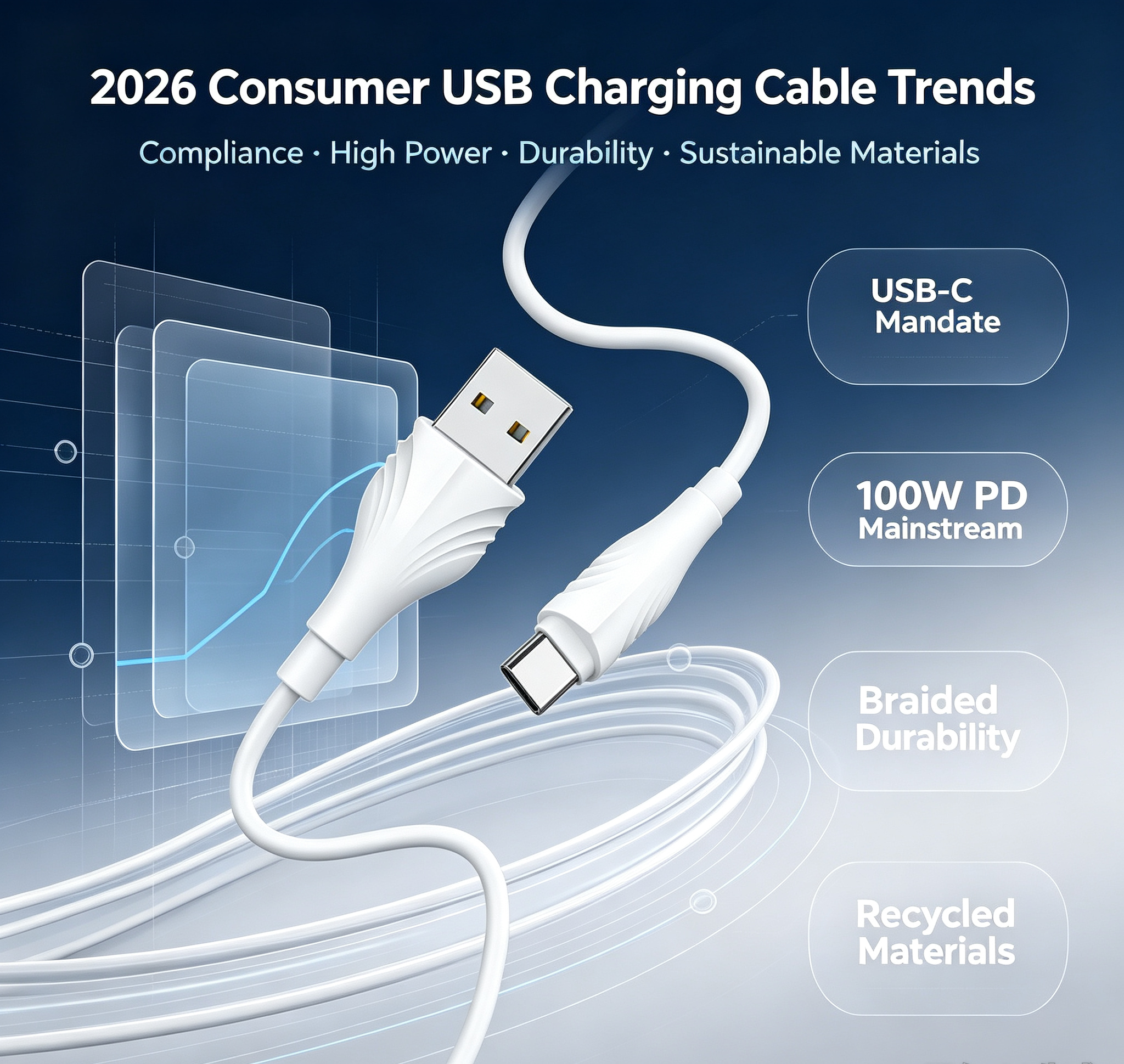
The consumer USB charging and data cable market is undergoing dramatic reshaping in 2026, driven by global regulatory rules, fast charging technology upgrades, and changing consumer buying habits. For retail brands and distributors sourcing consumer-grade phone cables, understanding these industry shifts helps avoid compliance risks and select products that reduce return rates. LINKSTRONG focuses exclusively on consumer USB charging & data cables, and we break down the most important market updates in this article.
1. EU USB-C Mandate Becomes Global Industry Baseline
The EU Common Charger Directive requires USB-C ports for all smartphones, tablets and portable electronics sold in Europe starting from late 2024, with laptops following the rule in April 2026. This regulation pushes USB-C to become the universal standard for new consumer devices.
While legacy Lightning cables still have residual demand from old iPhone users, new product development for consumer accessories is fully centered on USB-C to meet cross-border market requirements. B2B buyers now prioritize suppliers who can provide complete RoHS, REACH and USB-IF compliance documents for EU customs inspection.
2. 100W PD Cables Become Mainstream, 240W PD 3.1 Gradually Enters Premium Segment
High-power fast charging has become a core selling point for retail USB cables. 100W PD USB-C to C cables are now the mainstream premium SKU for mobile accessory brands, while PD3.1 240W cables are emerging in high-end product lines.
Any cable supporting power above 60W requires an E-Marker chip to negotiate stable power delivery. Many low-cost cables in the market falsely mark high wattage, which causes overheating and fast-charging dropouts. When developing high-power cables, mechanical structure must be matched with electrical performance, including reliable Stress Release Design of USB Cable to prevent connector root damage during daily use.
3. Cable Durability Becomes Critical Buying Factor, Braided Cable Demand Continues Rising
End users and retail buyers now pay far more attention to service life, not just charging speed. Ordinary PVC cables only complete 3,000–8,000 bending cycles, while nylon braided cables can hit over 20,000 cycles, greatly lowering product return rates for e-commerce brands.
Independent reliability testing is essential. Manufacturers must follow standardized testing protocols such as USB Cable Bending Test Standard to verify the mechanical lifespan before mass production. Retail customers are willing to accept a moderate price premium for reinforced, long-life cables.
4. Sustainable Recycled Materials Turn Into A Differentiator
Sustainability is no longer a niche marketing concept. Global buyers increasingly ask for cables made with PCR recycled PET braiding and low-impact TPE insulation, plus plastic-free packaging. Eco-friendly cable SKUs command higher margins in European, Australian and North American markets. Brands use green material features to stand out on Amazon and independent store listings.
5. Industry Pain Point: Spec Exaggeration & Compliance Risks
The consumer USB cable market faces serious homogenization and false specification marketing. Many cheap suppliers label cables as 100W PD without qualified E-Marker chips, which will trigger product recall risks in regulated markets.
For B2B purchasers, the key is to verify both electrical performance and mechanical durability, rather than only comparing unit prices. Reliable manufacturers provide full test reports for every SKU before shipment.
Conclusion
In 2026, consumer mobile USB cable competition is shifting from simple low-price competition to a combination of compliance, stable fast charging, mechanical durability and sustainable material options. Brands that select certified, well-tested custom USB cables will reduce after-sales complaints and build long-term product competitiveness.
If you want custom consumer USB charging data cables for your retail brand, feel free to contact us.
 OEM & Sourcing Guides
2026-09-04
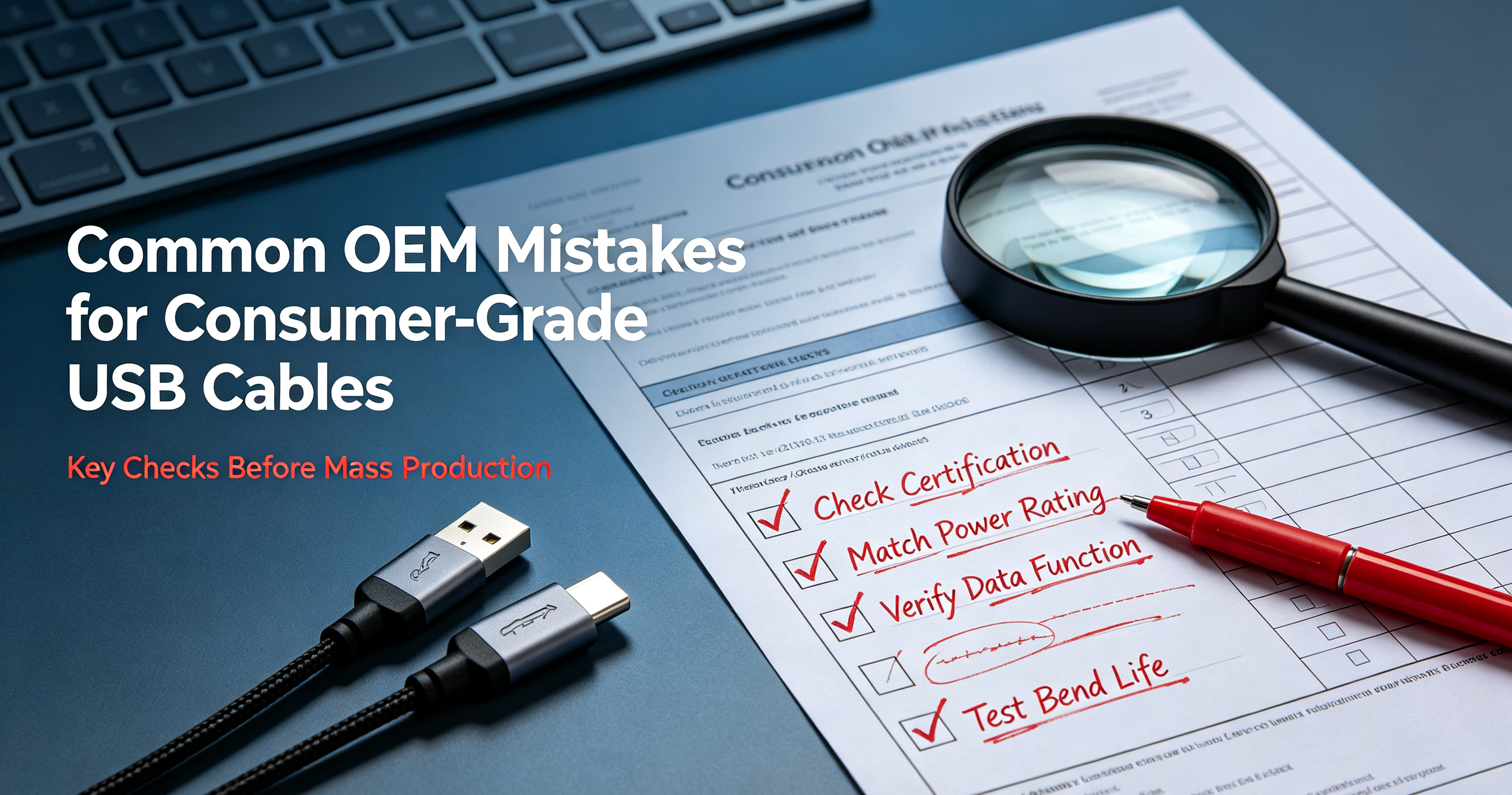
Common OEM Mistakes for Consumer-Grade USB Charging & Data Cables
Many consumer electronics brands face returns and compliance risks from poorly specified OEM USB cables. Thi…
OEM & Sourcing Guides
2026-09-04
Common OEM Mistakes for Consumer-Grade USB Charging & Data Cables
Many consumer electronics brands face returns and compliance risks from poorly specified OEM USB cables. Thi…
 Case Studies
2026-09-25
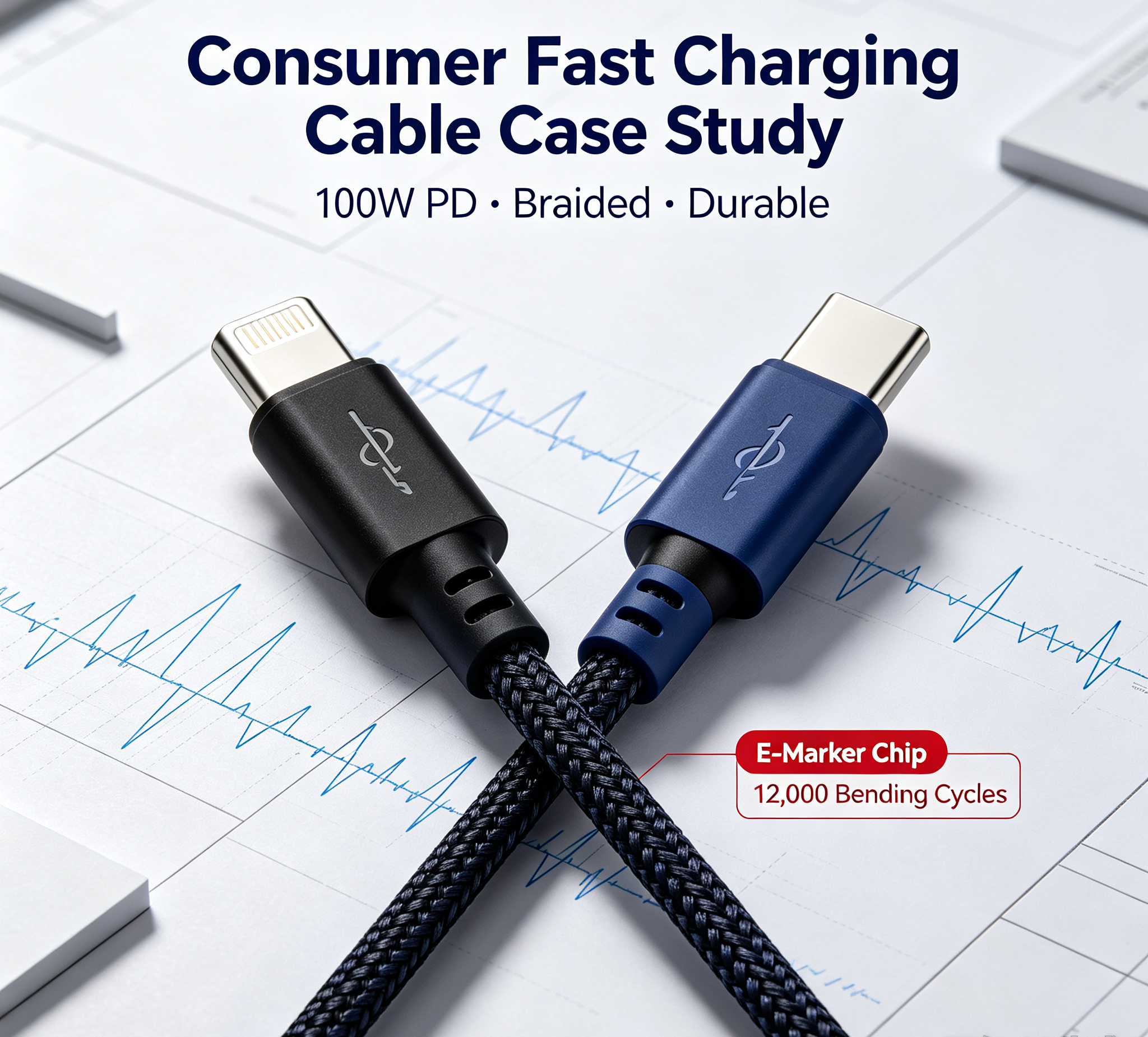
Case Study — Consumer Fast Charging & Data Cable
Explore LINKSTRONG’s custom consumer charging cable project for an electronics retail brand. This case cover…
Case Studies
2026-09-25
Case Study — Consumer Fast Charging & Data Cable
Explore LINKSTRONG’s custom consumer charging cable project for an electronics retail brand. This case cover…
 Case Studies
2026-09-28
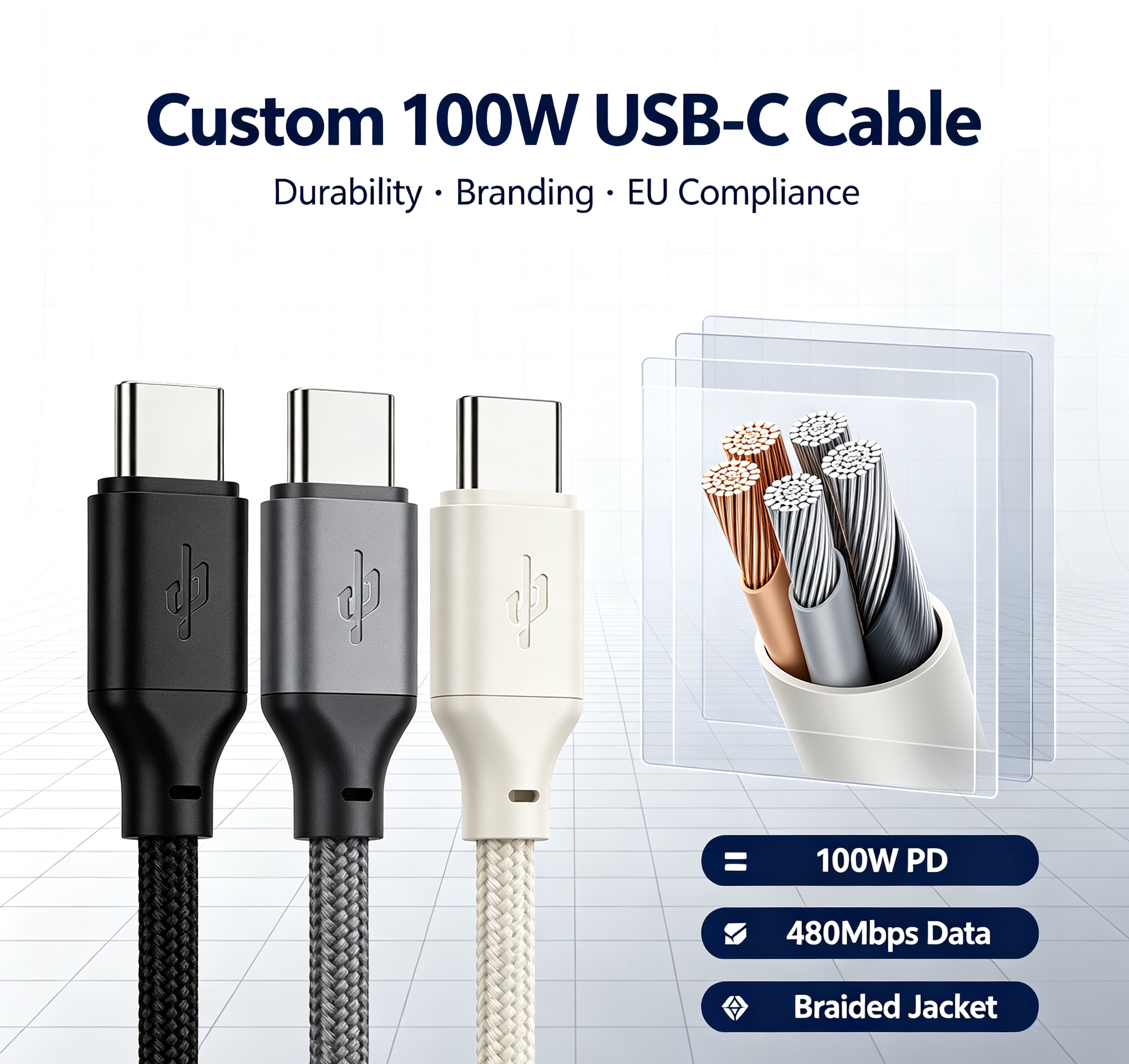
Case Study: Custom 100W USB-C Fast Charging Cable for Cross-Border E-Commerce Brand
This case study introduces our customized 100W PD USB-C to C charging and data cable solution for a European…
Case Studies
2026-09-28
Case Study: Custom 100W USB-C Fast Charging Cable for Cross-Border E-Commerce Brand
This case study introduces our customized 100W PD USB-C to C charging and data cable solution for a European…
Need this cable built to your specification?
Send your drawing, sample or target price — our engineers reply within 24 working hours.