Why Cables Are Harder to Color-Match Than Boxes
A folding carton is printed with ink under controlled conditions, so it hits a Pantone value closely. A cable is a fabric-woven jacket or extruded polymer, and both materials interact with light differently:
- Braided nylon yarn is dyed in bulk and then woven; the braid pattern creates tiny shadows that make the perceived color darker and less saturated than the same dye on flat fabric.
- TPE and silicone jackets are colored by masterbatch during extrusion, and the finish (matte versus glossy) changes perceived tone more than most buyers expect.
- Connector shells and strain reliefs are separate plastic parts, often molded by a different process from the jacket, so "one color, three parts" really means three separate matching jobs.
This is why professional factories talk about delta-E tolerance (the measurable difference between target and sample) rather than promising "exact Pantone" — and why our overview of USB cable jacket materials notes that the same Pantone can shift noticeably between silicone, TPE, and braided nylon.
The Masterbatch and Dyeing Reality
Color enters a cable at one of two points. For extruded jackets, the factory blends color masterbatch into the base polymer — small changes in ratio, extrusion temperature, or cooling speed shift the final shade, which is why the process parameters get locked after approval. For braided jackets, yarn is dyed to a lab dip, and dye lots vary between yarn suppliers. Two practical consequences follow:
- A re-order can drift if the factory changes yarn suppliers or masterbatch lots without color-checking against the approved sample.
- Very light or very saturated colors are the hardest: pale colors show the dark core through thin braid, and deep saturated tones often need custom dye lots with higher minimums.
Brands planning a multi-color line should read our guide to nylon braided USB cable construction to understand how braid density affects both color and durability.
The Approval Chain: Swatch, Lab Dip, Golden Sample
A disciplined color process runs through three gates, and skipping any of them is how drift happens:
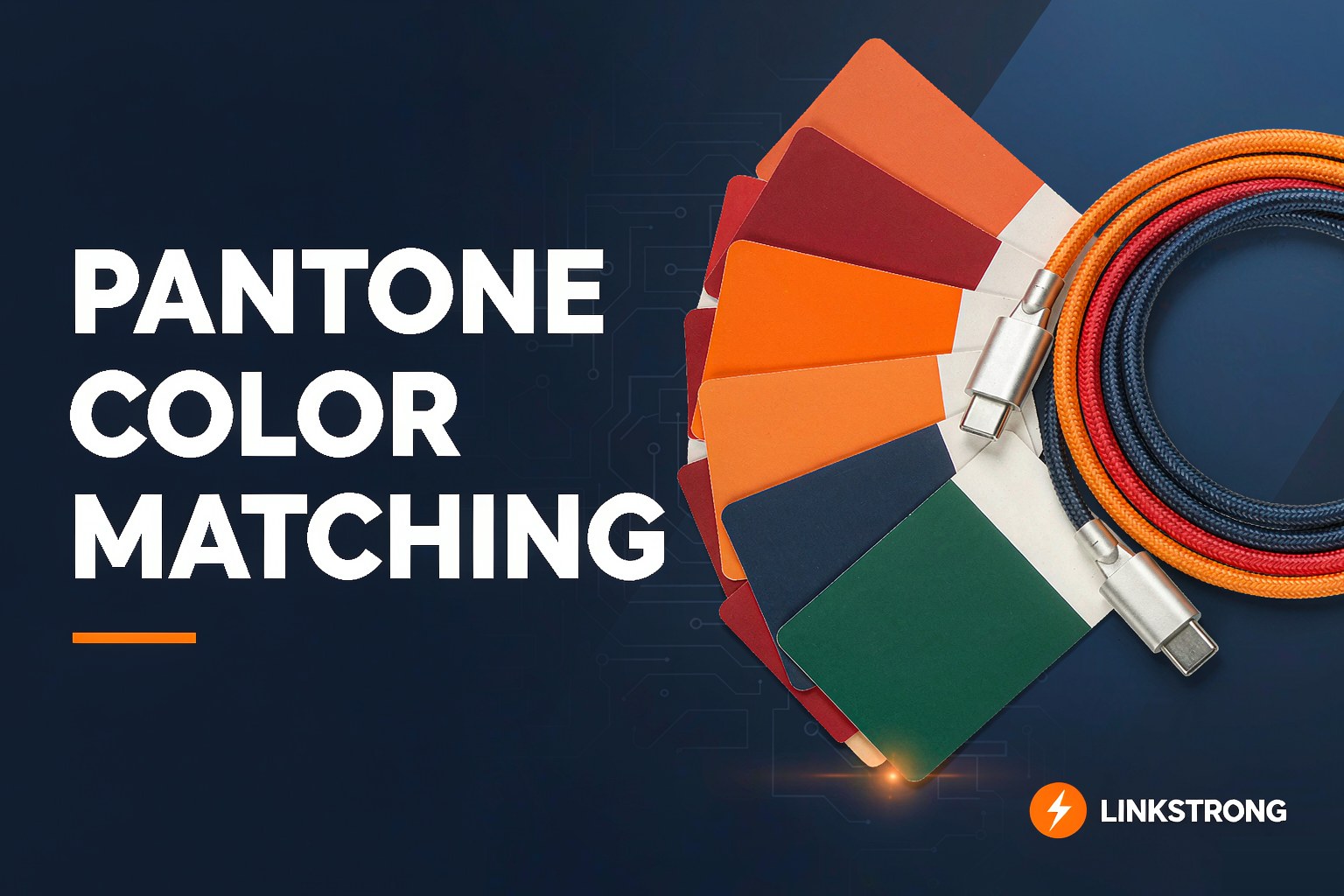
- Pantone reference: the brand supplies the Pantone number (solid coated is standard) plus a physical swatch if the color is business-critical. A number alone leaves room for interpretation.
- Lab dip or first article: the factory produces a dyed yarn or extruded sample and both sides measure it against the target. Approve in writing with photos under defined lighting.
- Golden sample: a sealed, signed production-representative sample kept by both parties. Every future batch is checked against it, not against the Pantone book.
Request the golden sample step explicitly in your RFQ — our custom cable RFQ guide lists it among the specification items that separate professional quotations from rough ones.
Checking Color Like a Factory Does
You do not need a spectrophotometer to catch most problems, but a few habits help. Evaluate samples under D65 daylight-simulating light, not office LEDs, which distort blues and cyans badly. Compare cable, connector, and packaging side by side, because a cable that matches its Pantone card can still clash with the box next to it on a shelf. And if color is a brand-critical requirement, ask whether the factory can provide delta-E readings against the golden sample for each production batch — it is a five-minute measurement that turns "close enough" into a number both sides agreed on.
Finally, plan for the parts you forget: strain reliefs, connector shells, cable ties, and the stitch or heat-shrink at the connector exit all carry color, and each has its own material and process. Specify them in the same color document.
The MOQ Question for Custom Colors
Custom color has a cost structure: a special masterbatch lot or custom-dyed yarn carries a minimum order that may exceed what your first production run needs. Before specifying an unusual color, ask what colors the factory already runs — an in-stock color at a slightly adjusted tone is often visually identical and dramatically cheaper. If you are weighing that trade-off, our article on MOQs for custom cable programs explains how material minimums drive order quantities.
Color done right is invisible; done wrong, it shows up in every product photo and returns pile. If you want a factory that treats Pantone matching as a documented process — swatch to lab dip to sealed golden sample — contact the LINKSTRONG team and we will walk your brand palette through the full approval chain before a single meter of production runs.