A cable that works fine in a clean office may crack, harden or fail quickly once placed in factory floors, medical equipment, outdoor machinery or heavy cyclic bending.
What Is Cable Jacket?
The jacket is the outermost protective layer of the cable. It covers the internal conductors, insulation and shielding. It provides mechanical protection, abrasion resistance, chemical resistance, and insulation against the environment.
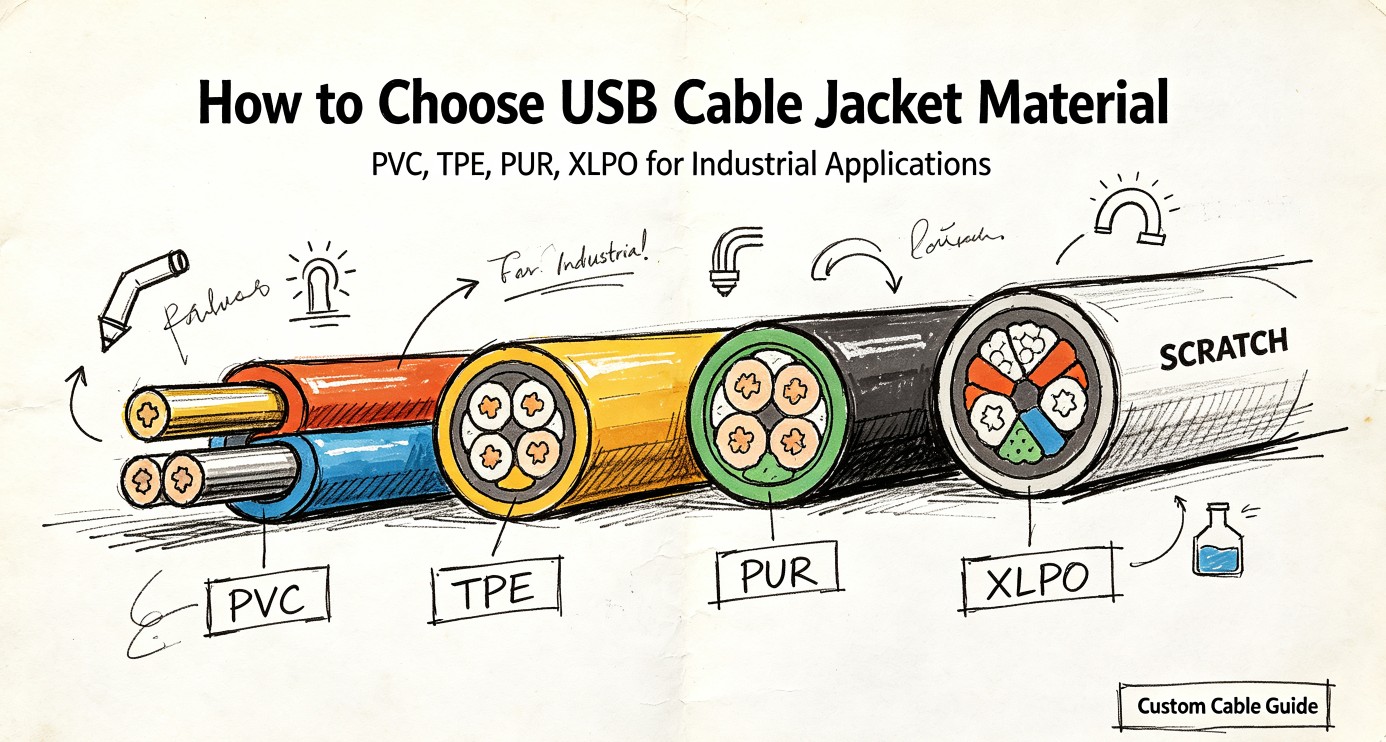
Common USB Cable Jacket Materials
PVC (Polyvinyl Chloride)
PVC is the most common low-cost jacket material for consumer USB cables.
- Advantages: Low cost, good rigidity, easy extrusion, basic oil resistance
- Limitations: Poor low-temperature flexibility, will become stiff in cold environments. Not suitable for repeated bending. Releases toxic smoke when burned. Some industrial and medical projects restrict PVC.
- Typical use: Static desktop cables, low-cost consumer USB cables, indoor stationary applications.
TPE (Thermoplastic Elastomer)
TPE is widely used in modern consumer and mid-grade industrial USB cables.
- Advantages: Soft touch, good flexibility, non-toxic, low-temperature performance better than PVC. No halogen options available.
- Limitations: Lower abrasion resistance than PUR. Not suitable for heavy oil or strong solvent exposure. Limited continuous flex cycle life.
- Typical use: Medical low-voltage cables, handheld devices, consumer USB-C cords, general indoor flexible wiring.
PUR (Polyurethane)
PUR is the premium rugged jacket material for industrial dynamic cables.
- Advantages: Excellent abrasion resistance, high tear strength, great flex life. Resistant to oil, grease and many solvents. Wide temperature range.
- Limitations: Higher cost than PVC and TPE.
- Typical use: Drag chains, robotic moving parts, test instruments, heavy-duty industrial USB cables, equipment requiring millions of bending cycles.
XLPO (Cross-Linked Polyolefin)
XLPO is cross-linked polyolefin, widely used for high temperature and flame retardant applications.
- Advantages: High temperature resistance, excellent flame retardancy, low smoke, halogen-free. Good mechanical strength.
- Limitations: Less flexible than TPE/PUR, higher manufacturing cost.
- Typical use: High-temperature industrial environments, medical devices with strict fire safety requirements, equipment with high heat exposure.
Key Selection Factors for Industrial & Medical Projects
1. Temperature Range
Check minimum and maximum operating temperature. PVC will harden in cold workshops. XLPO works better under high heat.
2. Flexing Requirements
Static installation: PVC / TPE may be enough.
Continuous motion, drag chain, robotic arm: PUR is usually the preferred choice.
3. Chemical Exposure
Oil, hydraulic fluid, cleaning solvents in factories will quickly damage cheaper jackets. PUR offers superior oil resistance.
4. Safety Standards
Medical devices and public equipment often require halogen-free, low-smoke and flame-retardant materials, such as XLPO or halogen-free TPE.
5. Abrasion & Tear Resistance
For cables dragged on floors or rubbing against metal edges, PUR reduces wear and tear.
Common Misconceptions
❌ Myth: Soft cable jacket means better durability.
✅ Fact: Soft TPE feels nice, but PUR is tougher against abrasion and repeated bending.
❌ Myth: All halogen-free jackets are the same.
✅ Fact: Halogen-free can be TPE or XLPO. Their temperature and mechanical performance differ greatly.
❌ Myth: Consumer-grade TPE works for industrial equipment.
✅ Fact: Standard consumer TPE is not formulated for factory oil, solvent or millions of flex cycles.
How to Specify Jacket Material for Custom Cables
Define your operating environment: temperature, chemical exposure, static or dynamic bending.
Confirm compliance requirements: RoHS, REACH, medical or flame retardant standards.
Set mechanical requirements: abrasion resistance, flex cycles, tensile strength.
Balance budget and service life.
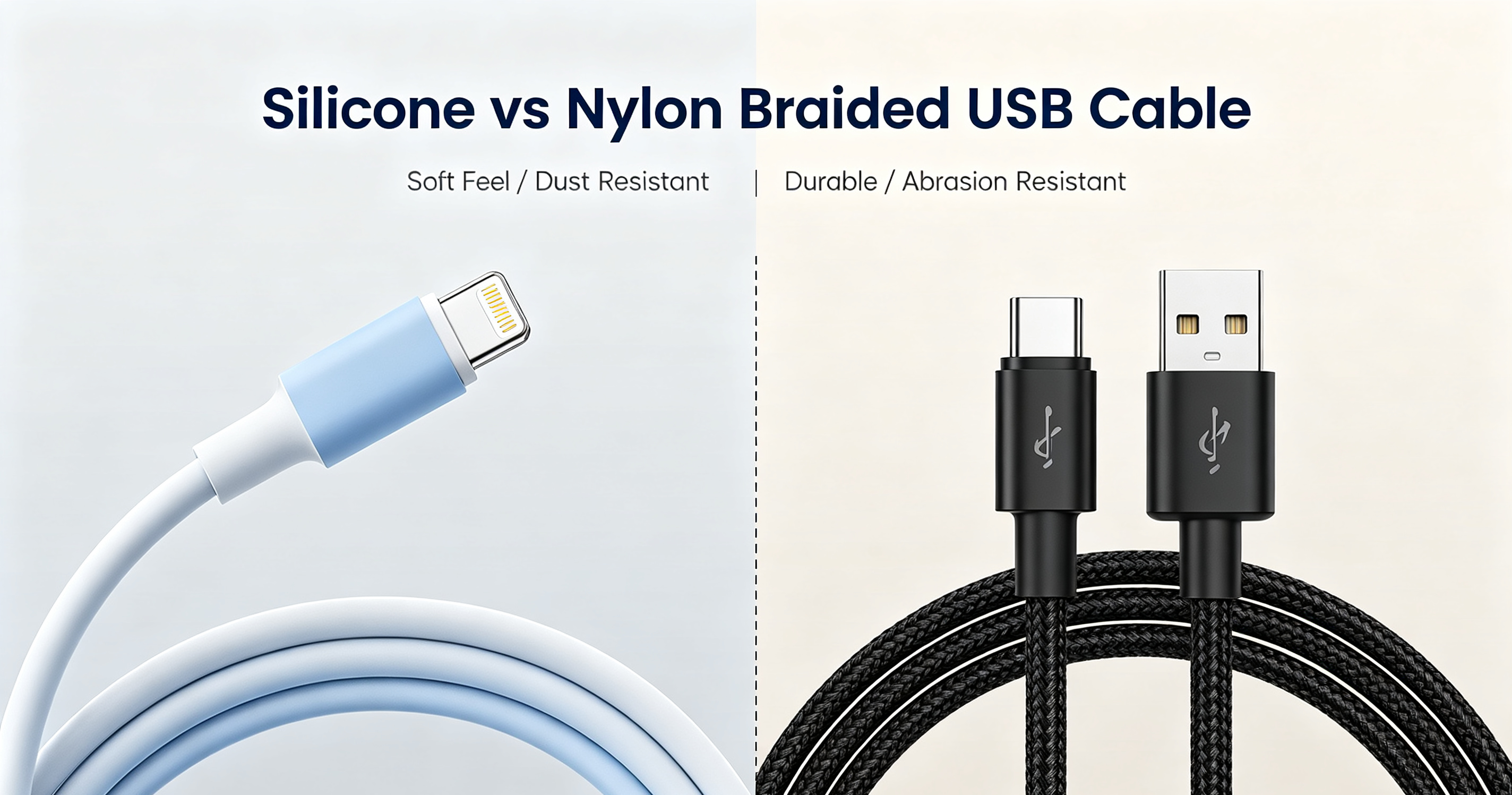
Important notice: For consumer USB charging and data cables, nylon braiding is a popular upgrade beyond solid PVC and TPU jackets. Nylon braided outer sleeves deliver better abrasion resistance and anti-tangling performance, ideal for retail packaged cables and brand promotional accessories. When selecting jacket solutions for your custom consumer cable project, you may compare the features of solid polymer jackets and woven nylon braided covers. Learn more about Nylon Braided USB Charging & Data Cable: Benefits & Manufacturing Guide.
LINKSTRONG provides custom USB cable assemblies with PVC, TPE, PUR, XLPO and other specialty jacket materials. Our engineering team selects proper jacket material based on your working environment, mechanical demands and certification requirements.
For custom industrial or medical USB cable projects, Contact LINKSTRONG Custom Cable Team to discuss jacket material selection.