1. Verify Product Certification for Your Target Market
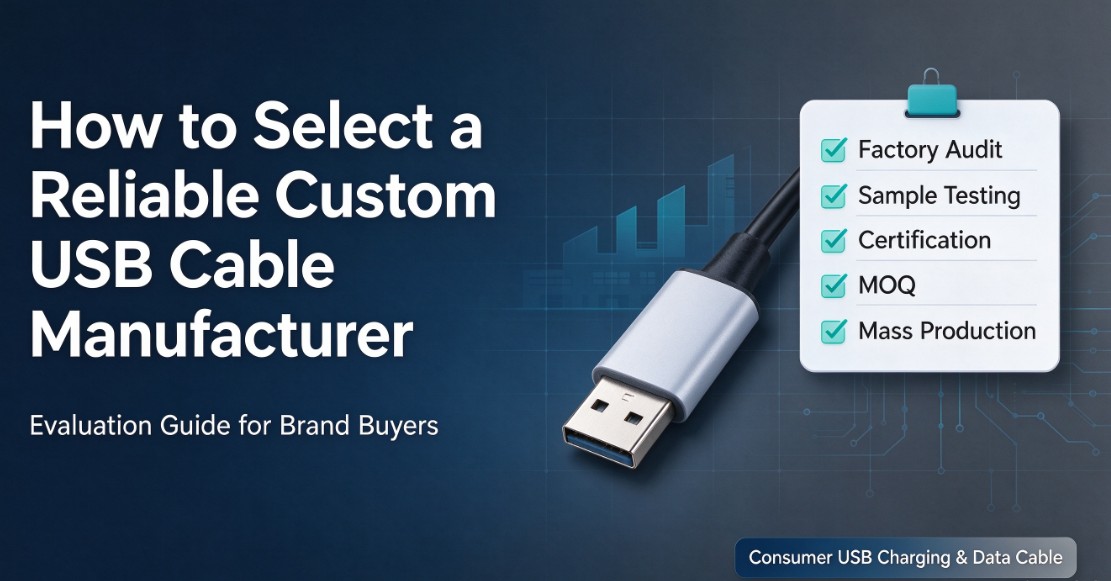
Before sampling, confirm the factory can provide valid certificates matching your sales regions. Consumer USB cables sold in EU, Australia, Africa and Brazil have different compliance requirements. Uncertified cables will be detained at customs or removed from retail shelves.
Check if the manufacturer can complete full testing for finished cables, not only raw material reports.
2. Sample Validation & Reliability Testing
Never judge a USB cable only by its appearance. Request pre-production samples and run a series of reliability tests:
- Bending cycle test at connector strain relief
- Voltage drop and charging performance test
- Abrasion test for outer jacket or nylon braided cables
- Plug and pull durability test
A trustworthy supplier will have in-house labs to carry out these tests before mass production. Refer to our article about USB Cable Bending Test Standard to understand standard testing requirements.
3. Confirm MOQ & Flexible Customization
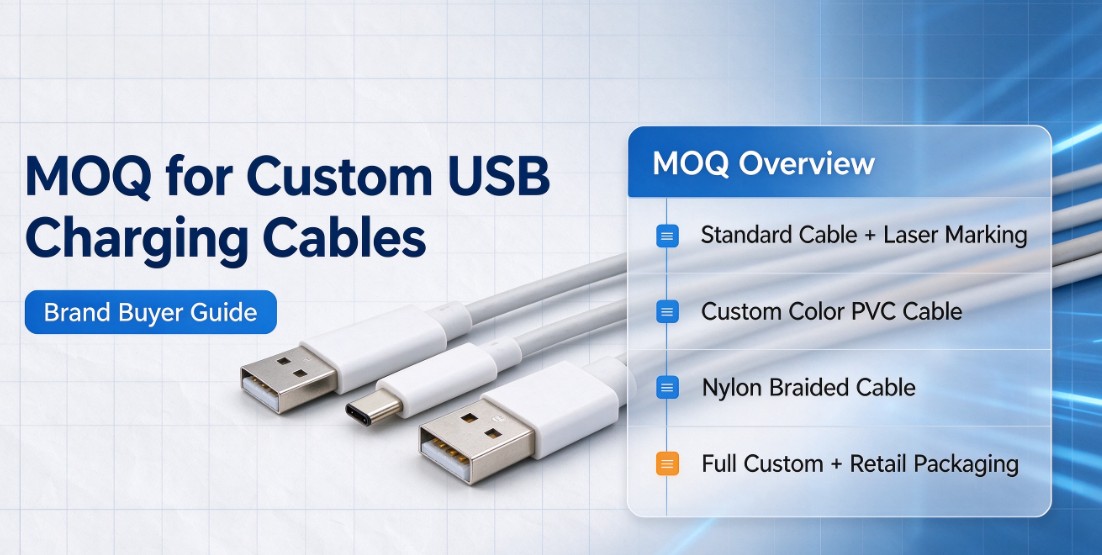
Different custom requests change minimum order quantity. Simple customizations like printed logo or standard color cables usually have lower MOQ. Custom nylon braid color, special wire gauge or exclusive packaging often require higher MOQ.
Discuss your batch plan in advance, especially if you are launching a small trial run for new retail products. You can learn more about nylon woven options in Nylon Braided USB Charging & Data Cable: Benefits & Manufacturing Guide.
4. Mass Production Consistency & Quality Control
A common sourcing pitfall: samples look perfect, but bulk goods have unstable copper conductors, easy peeling jackets or loose connector assembly.
Ask the supplier about their inline QC process: raw material incoming inspection, semi-product inspection and finished cable 100% visual check. Confirm they can keep the same specs from pre-production sample to mass shipment.
5. Lead Time & Communication
For retail seasonal promotions, lead time is critical. Clarify the timeline: sample making, tooling preparation, material procurement and mass production. Reliable OEM manufacturers will give clear schedules and update you promptly once delays happen.
6. After-sales Support for Bulk Orders
Check the supplier’s policy for defective goods in mass shipment. Good manufacturers provide replacement solutions for quality issues and support technical adjustment when you need to modify cable specs in later batches.
Final Tips for Brand Sourcing
Do not only compare unit price. Low-cost cables often use thin copper or low-grade jacket material, which leads to high return rates and damages your brand reputation. Balance cost, reliability and compliance for your consumer USB cable product line.
Discuss your custom USB charging cable project with LINKSTRONG. Contact us to request samples and quotations for your branded cable range.