Silicone USB Cable
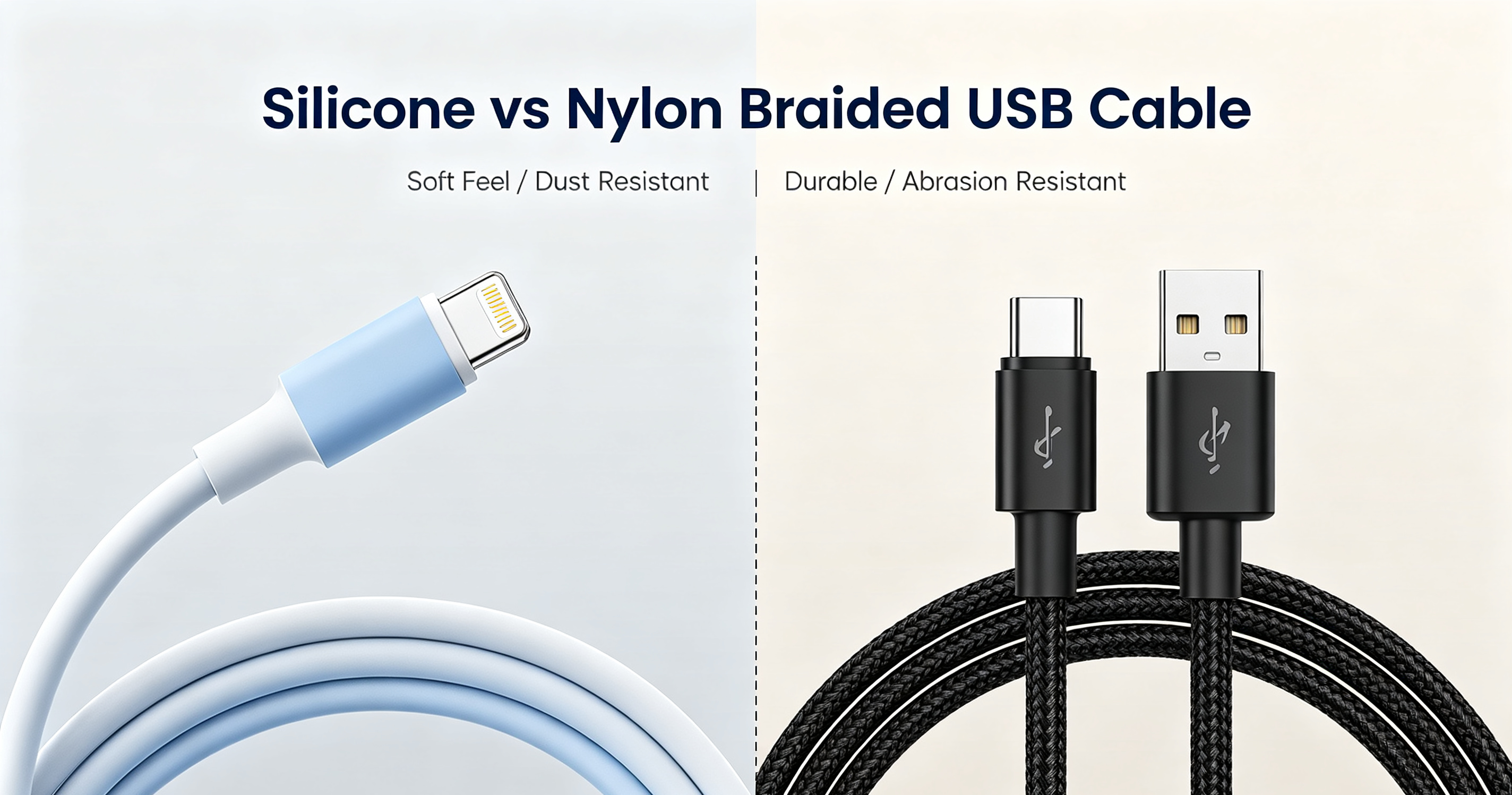
Silicone is a soft rubber-like material widely used for consumer charging cables.
Advantages of silicone jacket
- Super soft & flexible: Silicone cable can be folded and twisted freely, no hard crease left after bending. Great user hand-feel.
- Skin-friendly touch: Smooth, matte soft surface, non-sticky even in hot summer weather.
- Anti-dust performance: Less surface static, not easy to absorb dust and lint compared with braided cables.
- Color richness: Supports soft pastel colors, translucent colors, matte solid colors; perfect for fashion-oriented consumer products.
- Low noise: Will not produce rustling friction sound when moving the cable.
Disadvantages of silicone jacket
- Surface can scratch easily if contacting sharp objects.
- Compared with nylon braid, silicone has poorer resistance against sharp-edge abrasion.
- Unit cost is generally higher than ordinary TPE cable, similar or slightly higher than standard nylon-braided versions.
Best-fit scenarios for silicone cables
Consumer retail gift boxes, mobile accessory bundles, household daily-use charging cables, kids-friendly cable series, products targeting fashion-conscious end-users.
Nylon Braided USB Cable
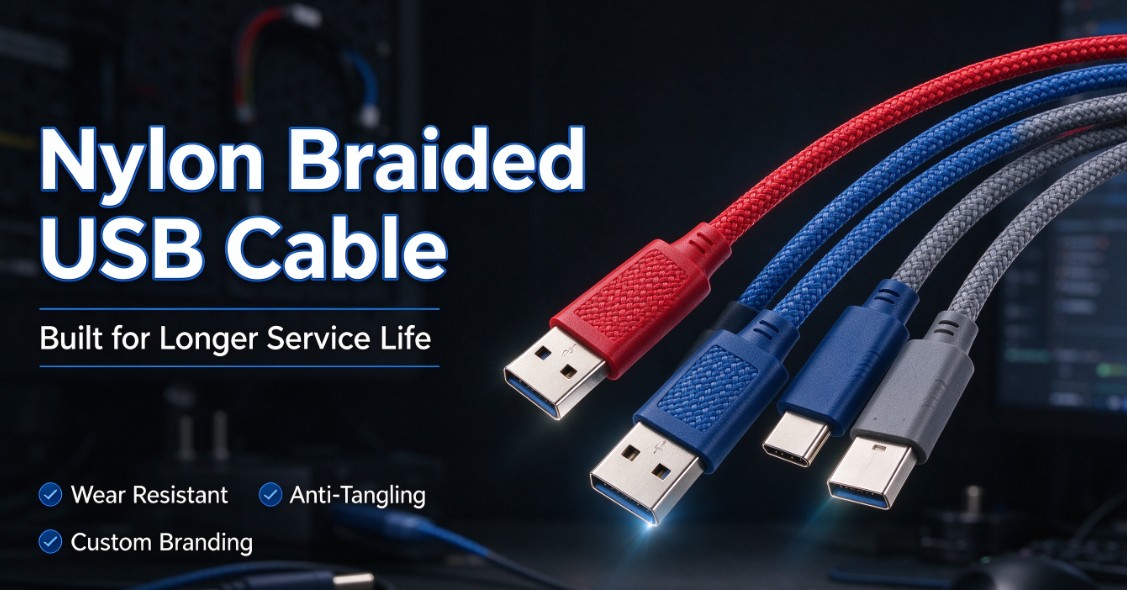
Nylon braided jacket weaves multiple nylon fiber threads into dense mesh cover over the inner cable core. It has dominated the high-end charging cable market for years.
Advantages of nylon braided jacket
- Outstanding abrasion resistance: Woven fiber structure resists scraping and pulling. Great anti-wear performance for heavy-daily-use.
- High tensile strength: Braided layer disperses pulling force, greatly reduces internal wire breaking risk.
- Texture appearance: Woven texture brings premium visual effect; metallic-thread mixed braid options are available for high-end retail.
- Mature mass-production: Stable supply chain, cost can be optimized for large-volume bulk orders.
Disadvantages of nylon braided jacket
- Static electricity makes it attract lint and dust easily, especially in dry climate regions.
- Obvious rustling friction noise when bending and moving.
- Harder hand-feel compared with premium soft silicone cables. Some cheap braided cables feel stiff.
Best-fit scenarios for nylon braided cables
Heavy-duty daily charging, travel accessories, e-commerce hot-selling retail cables, enterprise promotional gifts, products that emphasize long service life and anti-wear performance.
Core Comparison Table for OEM Buyers
1. Hand-feel: Silicone — soft silky; Nylon braided — firm woven texture
2. Abrasion resistance: Nylon braided > Silicone
3. Anti-dust performance: Silicone > Nylon braided
4. Color capability: Silicone supports more soft & translucent tones; Nylon braided suits solid, metallic mixed colors
5. Bending comfort: Silicone superior
6. Unit cost: Comparable at large-volume orders
How to choose for your product line
- If your brand targets young consumers, home-use scenarios, pursue soft tactile experience and fashion appearance: Prioritize silicone USB cables.
- If your positioning focuses on durability, travel-use, heavy-end-user scenarios, cost-effective mass retail: Nylon braided cables are more suitable.
- Many OEM customers build dual product lines: launch silicone series for high-end fashion SKUs and nylon-braided series for mainstream bulk-selling models.
Customization supported at LINKSTRONG includes cable length, connector metal housing, logo laser engraving / silk print, pantone color matching for both silicone and nylon braided cables.
Check our USB cable series for reference samples.
Conclusion
Neither silicone nor nylon braided is absolutely better. The correct choice depends on your brand positioning, target customer group and sales scenarios. You can also request factory samples for real hand-on comparison before confirming bulk production. Our engineering team can provide material sample support and quotation for your OEM project.