But not all USB-C cables are the same. A low-quality cable may cause slow charging, unstable data transfer, intermittent connections, overheating, or early failure. For brands and manufacturers, choosing the right USB-C cable directly affects product experience, return rate, and brand reputation.
This guide explains the key factors to consider when selecting a USB-C cable for mobile accessories.
1. Charging Power
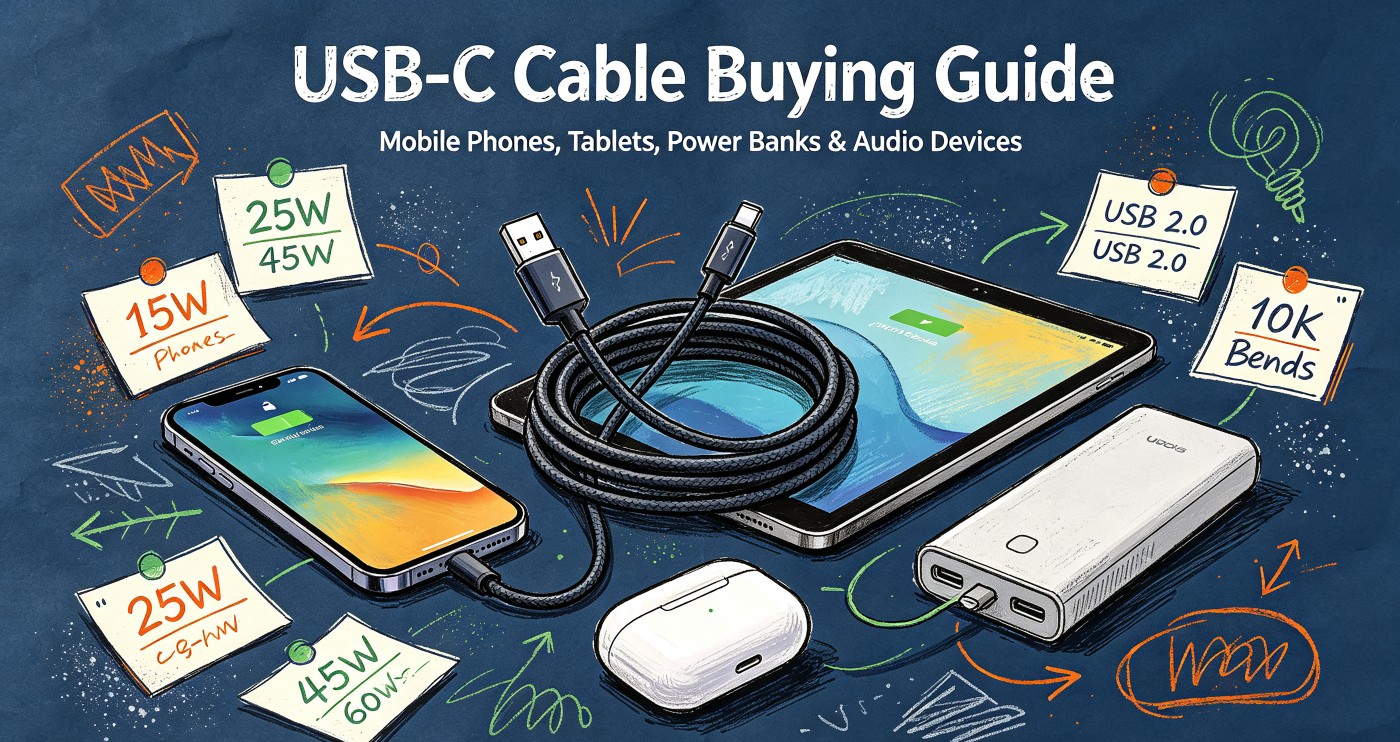
The most important factor for mobile accessories is power delivery. USB-C cables must support enough current and voltage for fast charging.
Common power levels include:
- 15W
- 18W
- 25W
- 45W
- 60W
- 100W
Higher power requires thicker conductors and better control of voltage drop. If the cable cannot carry enough current, the device will charge slowly or stop fast charging.
2. Data Transfer Speed
USB-C cables support different data speeds. The cable must match the device’s capability.
Common data levels include:
- USB 2.0: suitable for charging and basic data sync
- USB 3.2 Gen 1: suitable for faster file transfer
- USB 3.2 Gen 2: suitable for high-speed data transfer
- USB4 / Thunderbolt: suitable for high-end devices and video data
For most mobile phones, tablets, and power banks, USB 2.0 or USB 3.2 is often sufficient. For high-end laptops, cameras, and professional accessories, higher speed cables may be required.
3. Wire Gauge
Wire gauge, or AWG, determines current capacity and voltage drop. Thicker conductors carry more current with less heat and less power loss.
For high-power mobile accessories, power conductors are especially important. A thin cable may feel lightweight, but it can limit charging speed and become warm under heavy load.
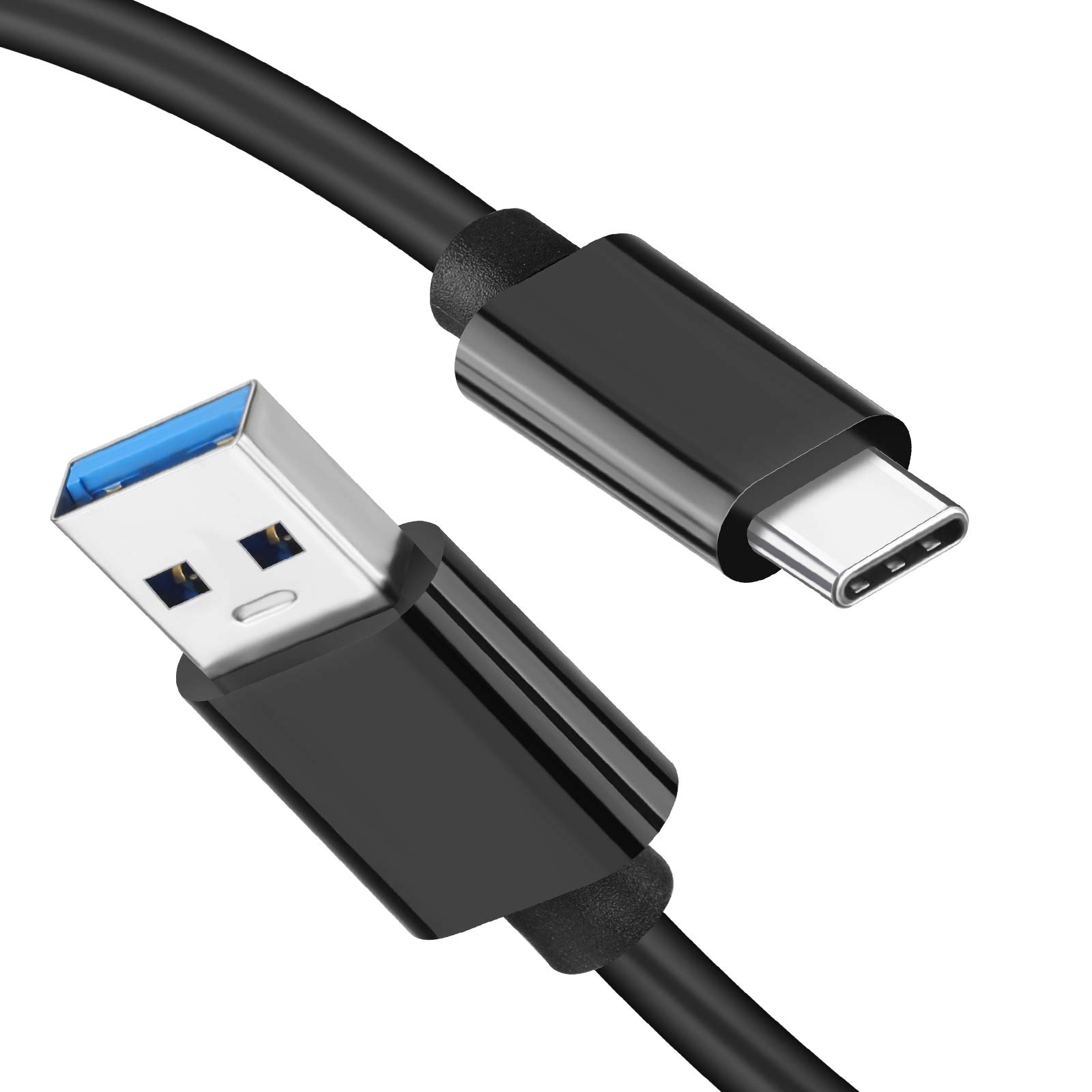
4. Connector Quality
The USB-C connector is the weakest point in many cables. Poor connector quality can cause:
- Loose connection
- Intermittent charging
- Data transfer failure
- Short connector life
- Poor contact resistance
Brands should consider connector durability, plating quality, retention force, and overall mechanical design.
5. Strain Relief
The area where the connector meets the jacket is under the most mechanical stress. Without good strain relief, the cable will bend, twist, and eventually break.
A reliable USB-C cable should have:
- Strong internal reinforcement
- Smooth transition between connector and jacket
- Improved bending resistance
- Good tensile strength
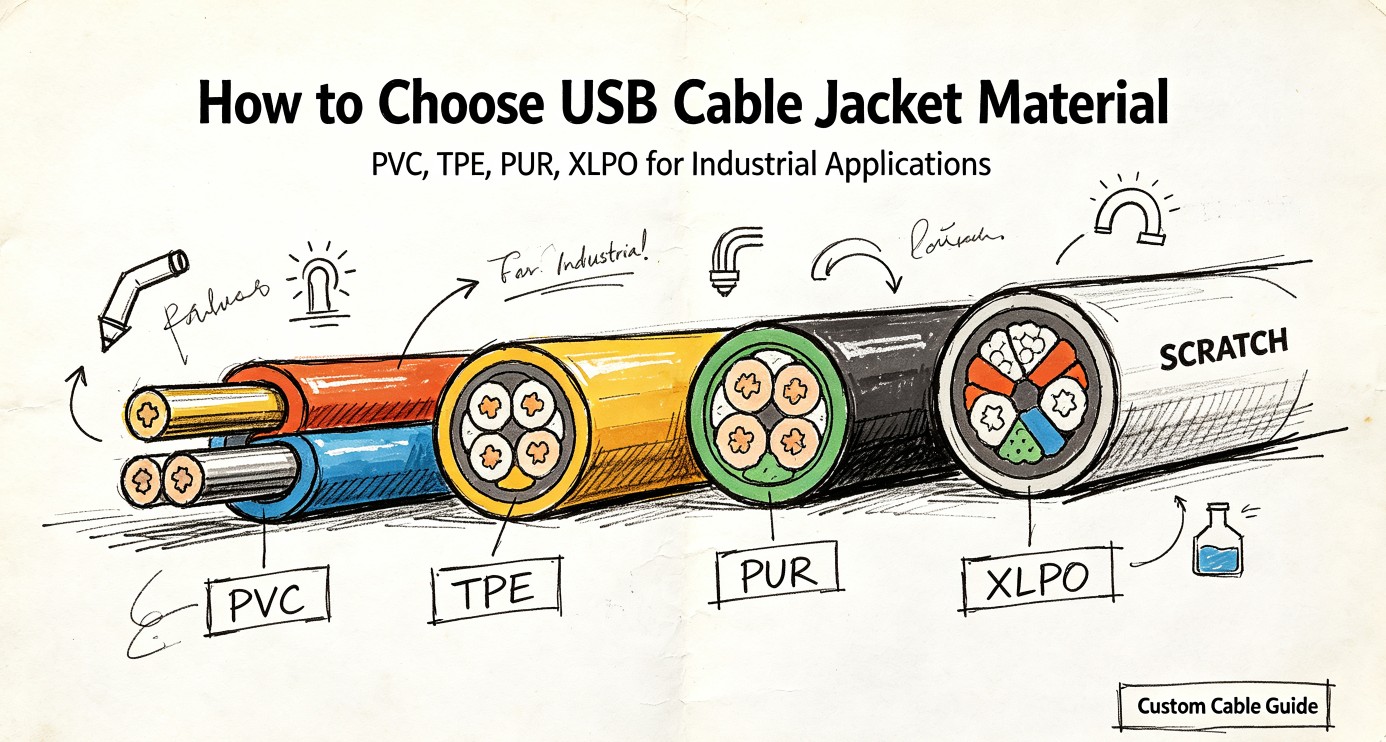
6. Jacket Material
Mobile accessories are frequently bent, coiled, carried, and pulled. The jacket material affects durability and user experience.
Common jacket materials:
- PVC: low cost, but less flexible
- TPE: flexible, soft, and popular for mobile accessories
- PUR: more durable for industrial or heavy-use applications
For most mobile accessories, TPE is the preferred choice because it balances flexibility, durability, and user comfort.
7. Bending Durability
Mobile USB-C cables are used every day. They are bent at different angles, pulled from power banks, and twisted inside bags.
Brands should define bending cycle requirements. A good mobile accessory cable should be designed for thousands of bending cycles without failure.
8. Appearance and Branding
USB-C cables are also part of the product experience. Branded cables can use custom colors, molds, imprints, and packaging to improve visual consistency.
Common branding options:
- Custom jacket color
- Connector shell color
- Laser marking
- Pad printing
- Custom strain relief shape
- Retail packaging design
9. Compliance
Consumer electronics accessories must meet safety and environmental requirements. Brands should confirm compliance before mass production.
Common requirements:
- RoHS
- REACH
- CE
- FCC
- UL
- Local safety standards
10. Application Scenarios
Different mobile accessories have different requirements.
Smartphones
Smartphone USB-C cables need good charging performance, basic data sync, and high bending durability.
Tablets
Tablets often require higher power and stable data transfer.
Power Banks
Power bank cables must handle continuous current and frequent bending.
Audio Devices
Headphones, speakers, and wireless chargers need reliable connectivity and good appearance.
How to Select the Right USB-C Cable
When choosing a USB-C cable for mobile accessories, answer these questions:
1. What is the maximum charging power?
2. Do I need high-speed data transfer?
3. What is the required cable length?
4. How many bending cycles are needed?
5. What jacket material is best?
6. What connector quality level is required?
7. Do I need custom color or branding?
8. What compliance standards are required?
LINKSTRONG Supports Custom USB-C Cables for Mobile Accessories
LINKSTRONG designs and manufactures custom USB-C data charging cables for smartphones, tablets, power banks, audio devices, and other consumer electronics products.
We help brands select the right power level, data speed, conductor size, connector, jacket material, and branding solution.
If you want to build a custom USB-C cable for your mobile accessory product, Contact LINKSTRONG Custom Cable Team to discuss your requirements.