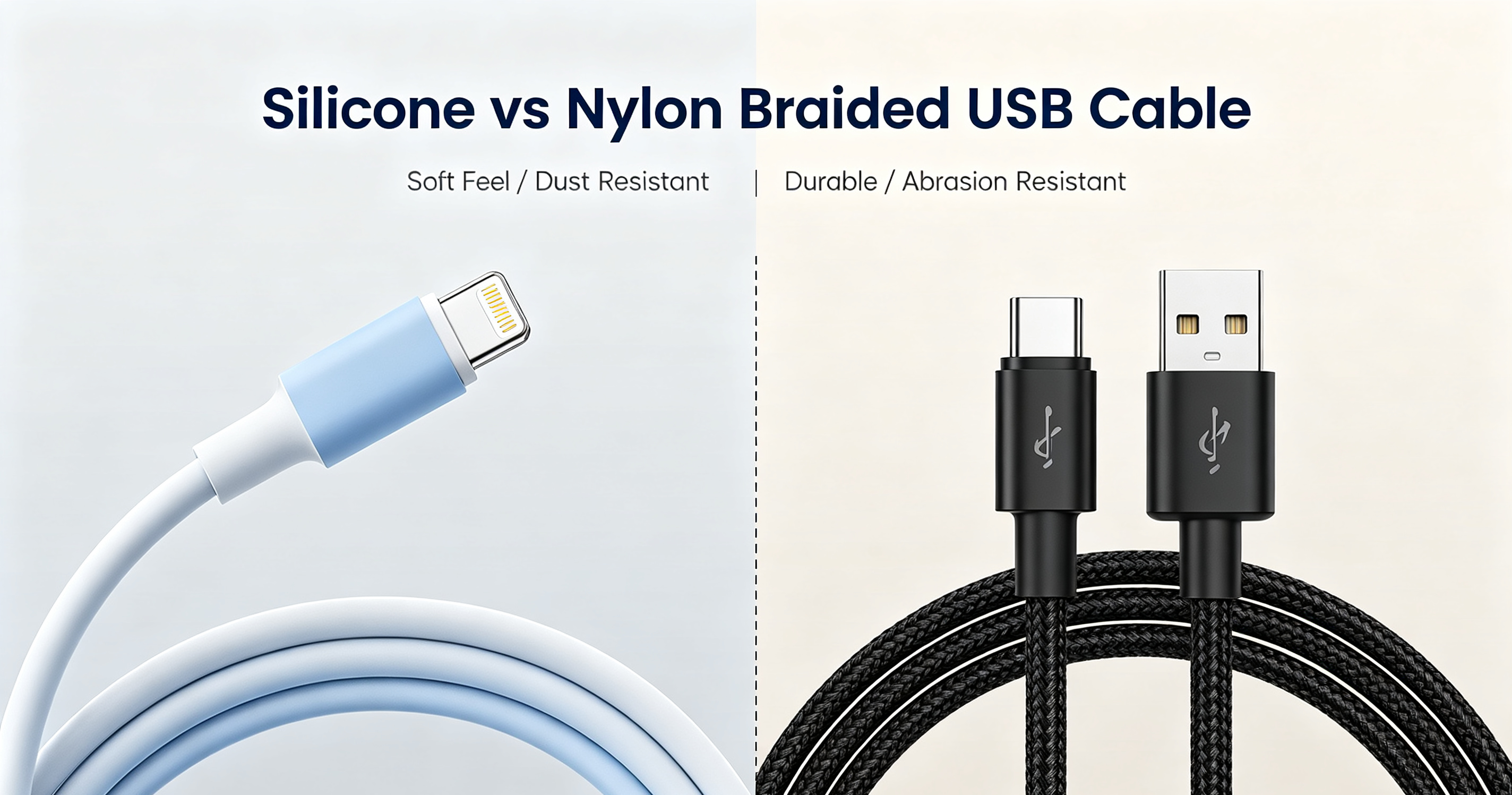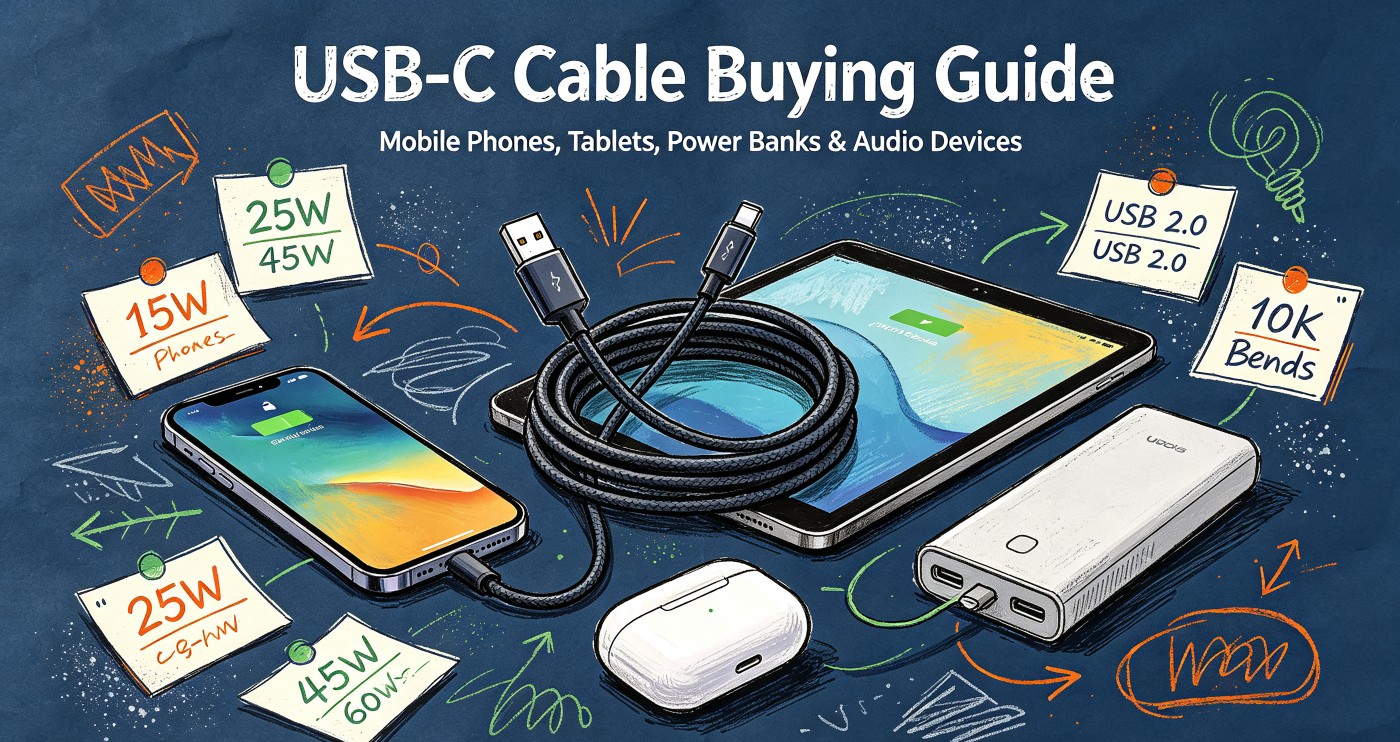
This guide explains what MFi actually covers, what it costs, how long it takes, and — most importantly — how to check that your supplier's certificate is real and covers the exact model you are ordering.
What MFi Certification Actually Is
MFi is Apple's licensing and compliance programme for third-party accessories that connect to Apple devices. For cables it does two things:
- It certifies that the product meets Apple's electrical and protocol requirements, tested at an Apple-authorised lab.
- It grants the manufacturer the right to buy genuine Apple authentication chips — historically the C48/C89/C94/C100 series — for use in the connector.
Those chips are the reason a certified Lightning cable works reliably and an uncertified one may trigger "This accessory may not be supported." Apple controls the chip supply, so a cable that uses a non-genuine chip cannot be MFi certified no matter what the packaging says.
> Important for 2026: since the iPhone 15 the flagship line uses USB-C, but the installed base of Lightning devices in the US — iPhones through the 14 series, AirPods, iPads and accessories — is still enormous. Lightning cables remain a high-volume US SKU, and Amazon's MFi requirement remains in force.
What the Certification Covers (and What It Does Not)
MFi is granted to a licensee against a specific product design, not to a factory in general. Two sourcing models exist in the US market, and they need different paperwork:
- Buying from an MFi-certified manufacturer — the most common model for a US brand. Your brand does not have to hold the licence itself: the cable is manufactured by an MFi-certified manufacturer and may be sold under your own brand. What you must be able to produce is the manufacturer's certificate plus the per-batch compliance record Apple issues once a production run passes its verification.
- Your brand becoming the licensee — appropriate when you own the tooling and design, or when you want your brand listed in Apple's MFi product directory. Your brand signs the licence, runs the product plan through Apple-authorised testing, and appears on the certificate.
Either way the certificate names the licensee and the specific design, never "the factory" in the abstract:
- A certificate held for model ABC does not automatically cover your private-label model XYZ, even if it is the same cable with your logo on it.
- Changing the connector, the authentication chip, the wire gauge or the Lightning plug supplier can invalidate coverage.
- The Lightning connector and authentication chip must come from Apple's authorised supply — there is no compliant shortcut.
When a supplier says "we are MFi certified, don't worry," the correct follow-up is: *"Send the certificate, confirm the manufacturing entity and the design it covers, and show me the batch compliance record for my production run."*
Realistic Cost and Timeline
Based on current US and China market practice:
| Item | Typical figure |
|---|---|
| MFi programme membership (per company, annual) | USD 99/year |
| Testing at an Apple-authorised lab (per product) | commonly USD 5,000–8,000 per design, including test and licence fees |
| Genuine Lightning authentication chips | from Apple's authorised supply, charged per unit |
| End-to-end timeline | 2–4 months; 3–5 months for a first-time licensee that also needs the factory system review |
The timeline is dominated by lab scheduling and Apple's review, not by manufacturing. Plan MFi into your launch calendar rather than treating it as a last-minute step.
One cost point buyers miss: when you buy through an MFi-certified manufacturer, the testing and chip cost is already inside the unit price rather than appearing as a separate project fee. It is also why a genuine Lightning cable costs more per unit than an equivalent USB-C build — the authentication chip has no compliant substitute.
Why US Platforms Enforce It
Amazon's policy is explicit: generic charging cables must be MFi certified for Lightning, and chargers must carry the relevant regional safety certification (UL for North America). Non-compliant listings are removed, and repeated or serious breaches affect account health. Beyond Amazon:
- Retail vendor onboarding — Target, Walmart and Best Buy-style buyers expect the certificate and a compliance file.
- Returns economics — uncertified Lightning cables have a far higher return and complaint rate because of unsupported-accessory pop-ups and premature failures.
- Legal exposure — using Apple's connector without a licence is trademark and licensing infringement, not just a platform issue.
What to Verify on the Certificate
Before you commit to a production run, obtain and check the following:
1. Certificate validity — current, not expired, with the correct MFi product type (Lightning cable).
2. Licensee and manufacturing site — the licensee named on the certificate and the manufacturing site, and whether the model is sold under the licensee's brand or yours.
3. Model coverage — the exact model or family you are buying, and whether your private-label version is covered by that listing.
4. Chip provenance — the supplier should be able to state which genuine Apple chip series is used and show traceability.
5. Test report — the Apple-authorised lab report behind the certificate, in case a platform asks for supporting documents.
6. Batch compliance record — the per-run record Apple issues once a production batch passes verification. This is the document that ties the cables you actually receive back to the certified design.
Ask for these once, up front — and ask for the batch record with every production run, not only for the first order. A genuine MFi supplier will have them on file and produce them quickly; a reseller will stall.
How MFi Works Alongside Other US Requirements
MFi is specific to the Apple Lightning interface. It does not replace safety certification. A Lightning cable sold in the US may still need:
- UL 9990 if it delivers power over USB-C at the other end and is sold on Amazon as a Type-C cable — the UL report is now the platform's gateway;
- FCC Part 15B for anything with active electronics that could radiate;
- California Prop 65 label assessment for jacket and connector materials;
- CPSIA testing if the product is marketed for children.
A competent factory consolidates these into one compliance file so your retail and platform submissions are straightforward. Our overview of USB-IF certification for OEM wholesale covers the parallel USB-C side of the same question.
Common MFi Sourcing Mistakes
- Trusting a logo on the sample. The certificate, not the print, is the evidence.
- Assuming any certificate will do. What matters is that the certificate covers the design you are buying and that a batch record exists for your run. A certificate for a sibling model proves nothing about your SKU.
- Changing the design after certification — a new jacket colour is fine, a new connector chip is not.
- Using a "compatible" chip. Counterfeit chips are the fastest route to permanent account suspension and an Apple legal letter.
- Forgetting the USB-C end. Many "Lightning" SKUs are USB-C to Lightning and therefore also in scope for Amazon's UL 9990 requirement.
What This Means for Your Order
If you are launching a Lightning SKU in the US, the practical sequence is:
1. Decide which model applies to you — sourcing from an MFi-certified manufacturer, or holding the licence in your own brand — and collect the paperwork that model requires.
2. Lock the design — connector, chip series, gauge, jacket — before testing.
3. Ask for the per-batch compliance record with each production run, not just a certificate PDF.
4. Run the MFi test alongside UL 9990 testing where the cable has a USB-C end.
5. Keep the certificate, the batch records, the lab report and chip traceability in a compliance folder you can hand to Amazon or a retail buyer within 24 hours.
Our Lightning range is produced by an Apple MFi-certified manufacturer, and we supply the certificate reference and batch records for verification rather than asking you to take our word for it — LINKSTRONG is the supplier, not the MFi licensee. If you would rather hold the licence in your own brand name, we will map that route and its timeline before you commit to tooling, so you are not paying for tooling twice. See how to select a reliable custom cable manufacturer or request a quote.