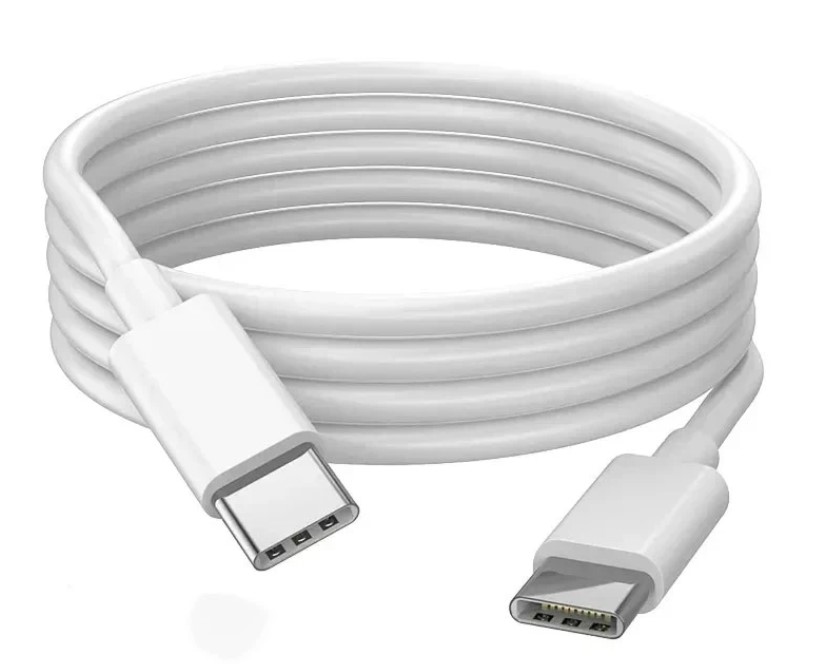
USB-C Power Delivery (PD) fast charging has become the global standard for smartphones, laptops, tablets, and consumer electronics. For OEM brands, distributors, and wholesale buyers, selecting the right USB-C PD charging cable directly affects product safety, charging speed, and end-user satisfaction.
Many buyers make the mistake of choosing cables based only on price. A low-quality PD cable may fail to deliver the advertised charging speed, overheat during use, or even damage expensive devices. Understanding the key technical specifications helps you source reliable cables at the right cost.
Power Rating: 60W, 100W, and 240W
USB-C PD cables are classified by maximum power delivery capacity. The most common ratings are:
- 60W: Suitable for smartphones, power banks, and small tablets. Supports 20V/3A current.
- 100W: Suitable for ultrabooks, laptops, and high-power tablets. Supports 20V/5A current and requires an E-marker chip.
- 240W: The latest PD 3.1 standard, suitable for gaming laptops, workstations, and high-power devices. Supports 48V/5A current.
Choosing the correct power rating ensures your devices charge at their maximum supported speed. Using a 60W cable with a 100W laptop will result in slow charging or no charging at all.
E-marker Chip: Why It Matters
Cables rated above 60W must include an E-marker (electronic marker) chip inside the connector. This chip communicates with the charger and device to negotiate the correct voltage and current.
Without a proper E-marker chip:
- 100W and 240W cables will not deliver full power
- Devices may refuse to charge for safety reasons
- Risk of overheating and cable damage
Professional manufacturers install genuine E-marker chips from reputable suppliers and test every cable for power negotiation before shipment.
Cable Construction and Internal Wiring
The internal construction of a PD charging cable determines both power capacity and durability. Key components include:
- Copper conductors: Higher purity copper reduces resistance and heat. 100W cables typically use 21AWG power wires.
- Shielding layer: Aluminum foil and braided shielding reduce electromagnetic interference and improve data transfer stability.
- Insulation material: TPE, PVC, silicone, or nylon braided outer jackets offer different levels of flexibility and durability.
- Connector housing: Metal alloy or reinforced plastic housings protect the internal solder joints from bending damage.
For high-volume OEM orders, you can customize wire gauge, shielding type, and jacket material based on your target market and price point.
Durability Testing Standards
A reliable PD charging cable should withstand thousands of plug cycles and bending tests. Professional factories perform the following quality tests:
- Bending test: 5000 to 10000 bends at 180 degrees without cable breakage
- Plug and unplug test: 5000 to 10000 insertion cycles without connector damage
- Pulling test: Withstand 5kg to 10kg pulling force without internal wire breakage
- Salt spray test: Metal connectors resist corrosion in humid environments
- High temperature test: Cable remains stable at 40°C to 60°C operating temperature
Always ask your supplier for test reports before placing a bulk order.
Custom OEM and ODM Options
For brands and distributors, customizing PD charging cables helps differentiate your products in a competitive market. Available custom options include:
- Custom cable length: 0.5m, 1m, 1.5m, 2m, or custom lengths
- Custom jacket material: Silicone, nylon braided, TPE, or PVC
- Custom colors: Pantone color matching for cable and connectors
- Custom logo printing: Laser engraving, silk screen printing, or pad printing on connectors
- Custom packaging: Blister packs, paper boxes, or retail-ready packaging
- Custom connector design: Metal housings, LED indicators, or right-angle connectors
LINKSTRONG manufactures custom USB-C PD fast charging cables for OEM brands, distributors, and wholesale buyers worldwide.
View our USB-C PD charging cable products for standard and custom cable solutions.
Conclusion
Selecting the right USB-C PD fast charging cable requires understanding power ratings, E-marker chips, internal construction, and durability standards. Working with an experienced manufacturer ensures your cables deliver consistent performance, pass safety certifications, and meet your brand quality requirements.
If you need custom PD charging cables for your brand or bulk wholesale supply, contact our engineering team for technical support and quotation.
 OEM & Sourcing Guides
2026-09-08
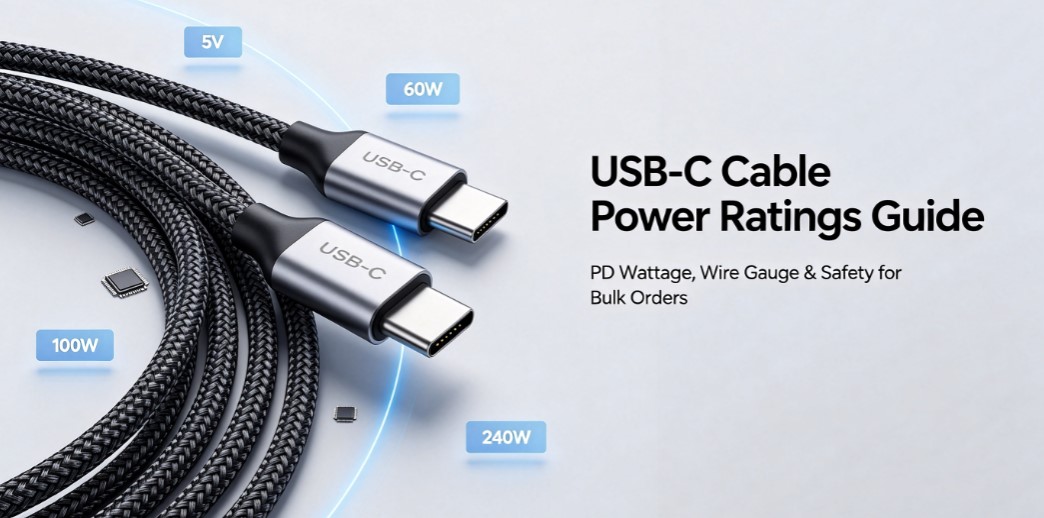
USB-C Cable Power Ratings Explained: How to Pick The Right Wattage for OEM Bulk Orders
USB-C cables support different power ratings from 5V basic charging up to 240W PD. Learn how wattage, wire g…
OEM & Sourcing Guides
2026-09-08
USB-C Cable Power Ratings Explained: How to Pick The Right Wattage for OEM Bulk Orders
USB-C cables support different power ratings from 5V basic charging up to 240W PD. Learn how wattage, wire g…
 OEM & Sourcing Guides
2026-09-29
How to Select a Reliable Custom USB Charging Cable Manufacturer for Your Brand
Choosing the right OEM manufacturer for custom consumer USB charging cables is critical for your retail prod…
OEM & Sourcing Guides
2026-09-29
How to Select a Reliable Custom USB Charging Cable Manufacturer for Your Brand
Choosing the right OEM manufacturer for custom consumer USB charging cables is critical for your retail prod…
 Case Studies
2026-09-25
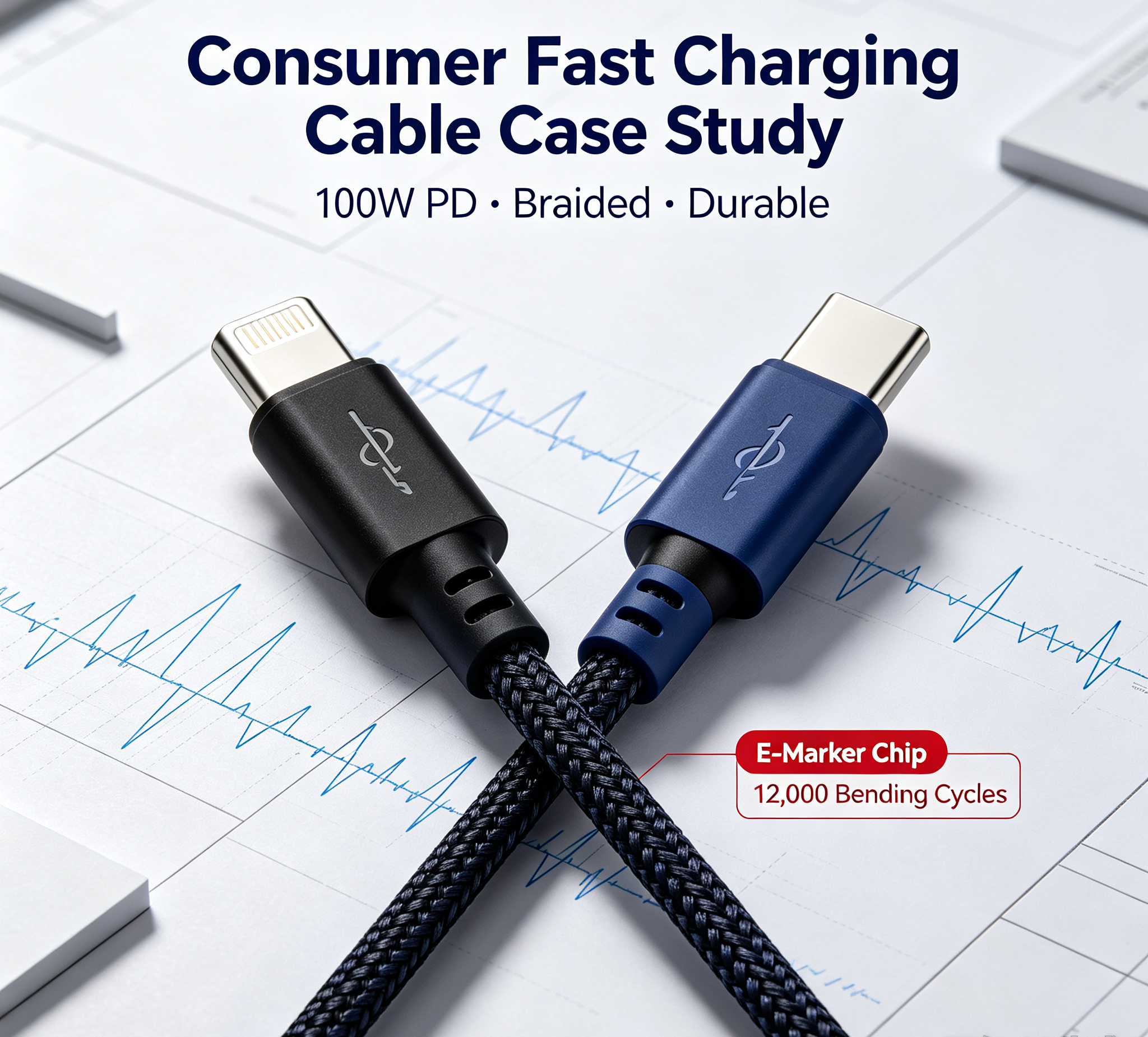
Case Study — Consumer Fast Charging & Data Cable
Explore LINKSTRONG’s custom consumer charging cable project for an electronics retail brand. This case cover…
Case Studies
2026-09-25
Case Study — Consumer Fast Charging & Data Cable
Explore LINKSTRONG’s custom consumer charging cable project for an electronics retail brand. This case cover…
Need this cable built to your specification?
Send your drawing, sample or target price — our engineers reply within 24 working hours.