The Three Main Formats
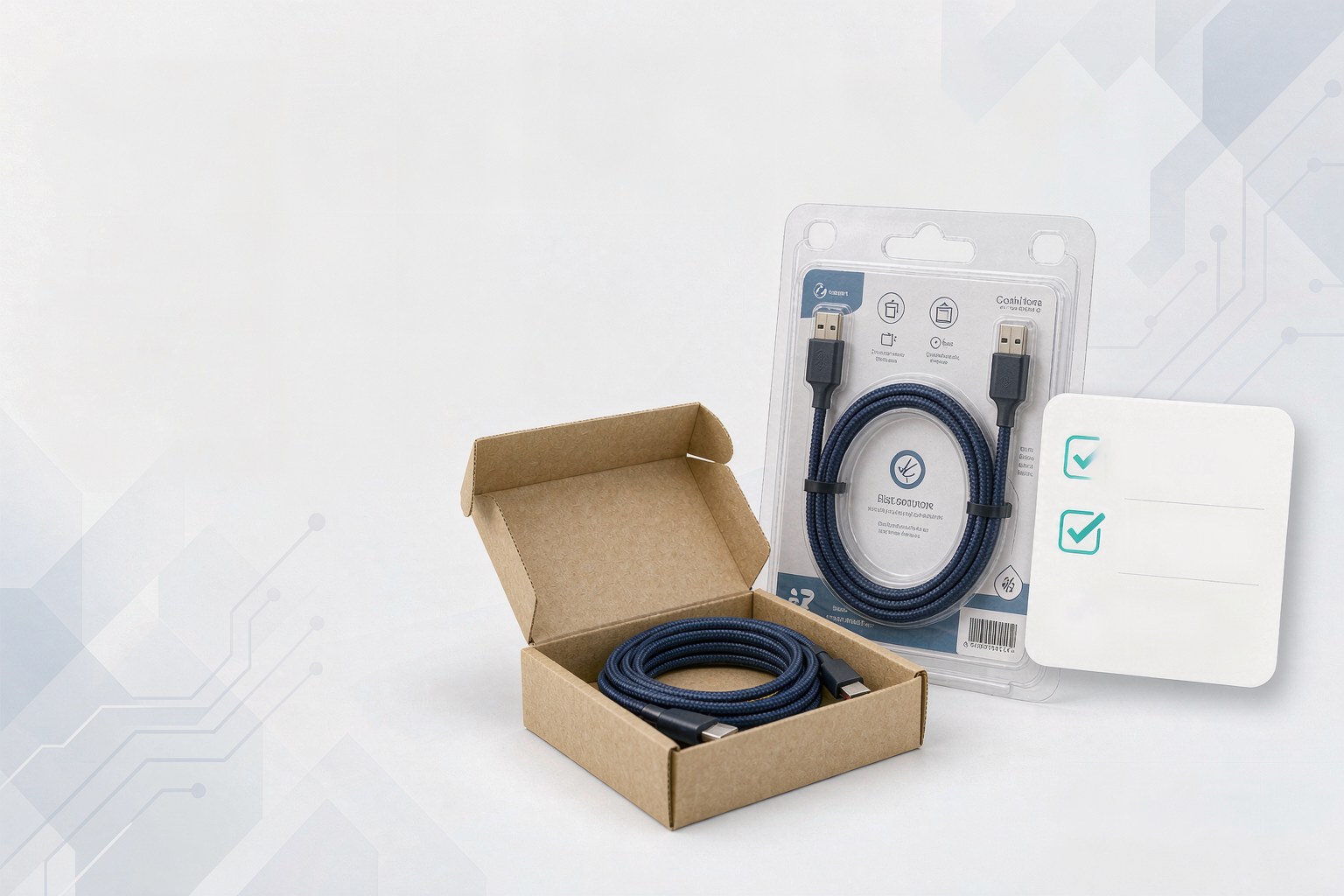
- Blister / clamshell — a clear plastic shell over a printed cardboard card. Best visibility on retail peghooks, decent crush protection, the traditional choice for US drugstore and auto-parts shelves. Downsides: plastic-heavy, needs a sealing machine or supplier-side skin packing, and increasingly reads as dated to eco-conscious shoppers.
- Paper box (magnetic or tuck-end) — the default for mid-to-premium brands. A tuck-end box with an inner tray (or a simple polybag + cable tie) balances cost and presentation. Magnetic-closure rigid boxes elevate unboxing for gift-positioned products but add real cost per unit.
- Eco kraft / simple sleeve — recycled kraft card, soy-ink printing, no plastic. Strong fit for brands with a sustainability story; also the cheapest per unit at volume. Protection is lighter, so inner packaging quality matters more.
Most of our US customers land on a tuck-end paper box with an inner polybag, or a kraft sleeve for entry-level SKUs. Blister survives mainly in auto and travel-retail channels.
What Packaging Costs — and the MOQ Reality
Cable packaging is priced by box type, print method and quantity:
- Offset-printed boxes typically start around 1,000–3,000 pcs per design. Below that, plate and setup costs dominate.
- Digital printing removes the plate cost and works for short runs and sampling, at a higher unit price.
- Special finishes — spot UV, foil stamping, soft-touch lamination — each add a process step; budget them for hero SKUs, not the whole range.
One practical point: the cable itself is a low-value item, so packaging can easily reach 15–25% of your landed unit cost. Decide early which SKUs justify premium finishes and keep the rest clean and simple. This interacts directly with MOQ planning covered in our custom cable MOQ guide — packaging MOQ and cable MOQ are separate constraints, and the binding one is usually the box.
Packaging for Amazon FBA
Cables are a low-risk category for FBA, but a few points are worth locking down in the specification:
- FNSKU labelling — decide whether the factory applies the label or you do it in-country. Factory-applied is one less step and usually cleaner.
- No oversized packaging. A slim box keeps dimensional weight down and avoids FBA prep surprises.
- Sealed but openable. FBA requires that the package not reveal contents loosely, yet must be openable without destroying it (customers return; boxes that cannot be resealed quietly become used-sold-as-new claims).
- Inner protection — a polybag with a suffocation warning print, plus a cable tie, keeps the coiled cable presentable after transit.
Also decide the unboxing story before art is final: warranty card, thank-you card with a review prompt (keep it policy-compliant), QR code to your support page. All of these are printed at the same time as the box and cost almost nothing extra.
Eco Packaging: Trend or Obligation?
In the US market this is moving from nice-to-have to expected, especially for brands selling into outdoor, kids and lifestyle segments. The practical version is not complicated: recycled board, avoid PVC windows, replace plastic trays with paper inserts, and print the claim honestly ("100% recycled board" only if it is). Overclaiming sustainability is a reputational risk, so have the supplier state the board's recycled content in writing.
How to Brief Your Supplier
A packaging brief takes one page and prevents most rework:
- Dieline dimensions (or ask the factory to propose, based on cable coil size and length)
- Cable length(s) the box must fit — a 2m cable coils twice the volume of a 1m
- Print method, colours, finishes
- Inner packaging: polybag gauge, warning print, tie type
- FNSKU placement, barcodes, regulatory marks (barcode, country of origin, RoHS statement)
We handle packaging as part of every custom cable project, from dieline proposal to printed sample before mass production. If you are building a retail range and want a packaging quote alongside the cable specification, contact our team with your SKU list and target price channel — blister, box and eco options all come back with MOQ and unit cost so you can compare properly.
For gift and campaign positioning, see our guide to promotional custom USB cables, where packaging does most of the brand work.