Why Prop 65 Applies to a Simple Cable
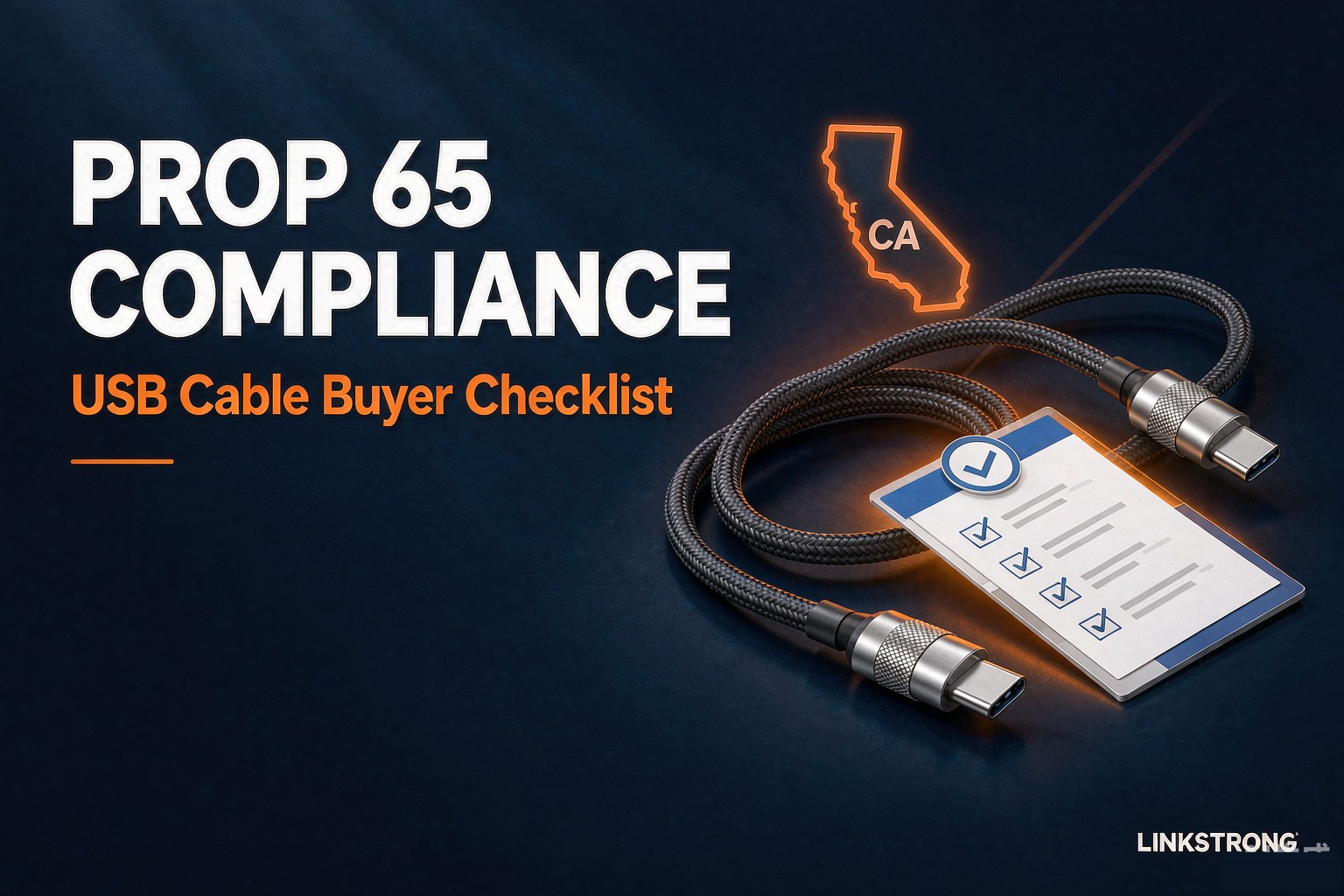
Prop 65 is a right-to-know law, not a safety standard. It requires a clear and reasonable warning when a product exposes California consumers to any of several hundred listed chemicals above a safe-harbor level. Private enforcers and plaintiff firms actively scan Amazon listings and retail shelves, and cables are a known target category because of the materials inside them. A settlement demand typically arrives with little warning and asks for both a settlement payment and proof of reformulation or labeling.
For a brand, the practical cost of an unread compliance file is therefore much larger than the price of getting it right up front. If you are still building your overall compliance plan, our guide to USB cable sourcing and compliance for Amazon sellers covers the broader picture.
Which Chemicals in Cables Trigger Prop 65
Four groups of listed substances matter most in cable construction:
- Phthalates (DEHP, DINP, DBP) — plasticizers historically used to soften PVC jackets and insulation. This is the single most common Prop 65 issue in low-cost cables.
- Lead and lead compounds — found in some PVC stabilizers, solder, and brass connector components.
- Cadmium — occasionally present in pigments or stabilizers in non-certified materials.
- Bisphenol A (BPA) — less common in cables but listed, and sometimes raised in demands touching hard plastic housings.
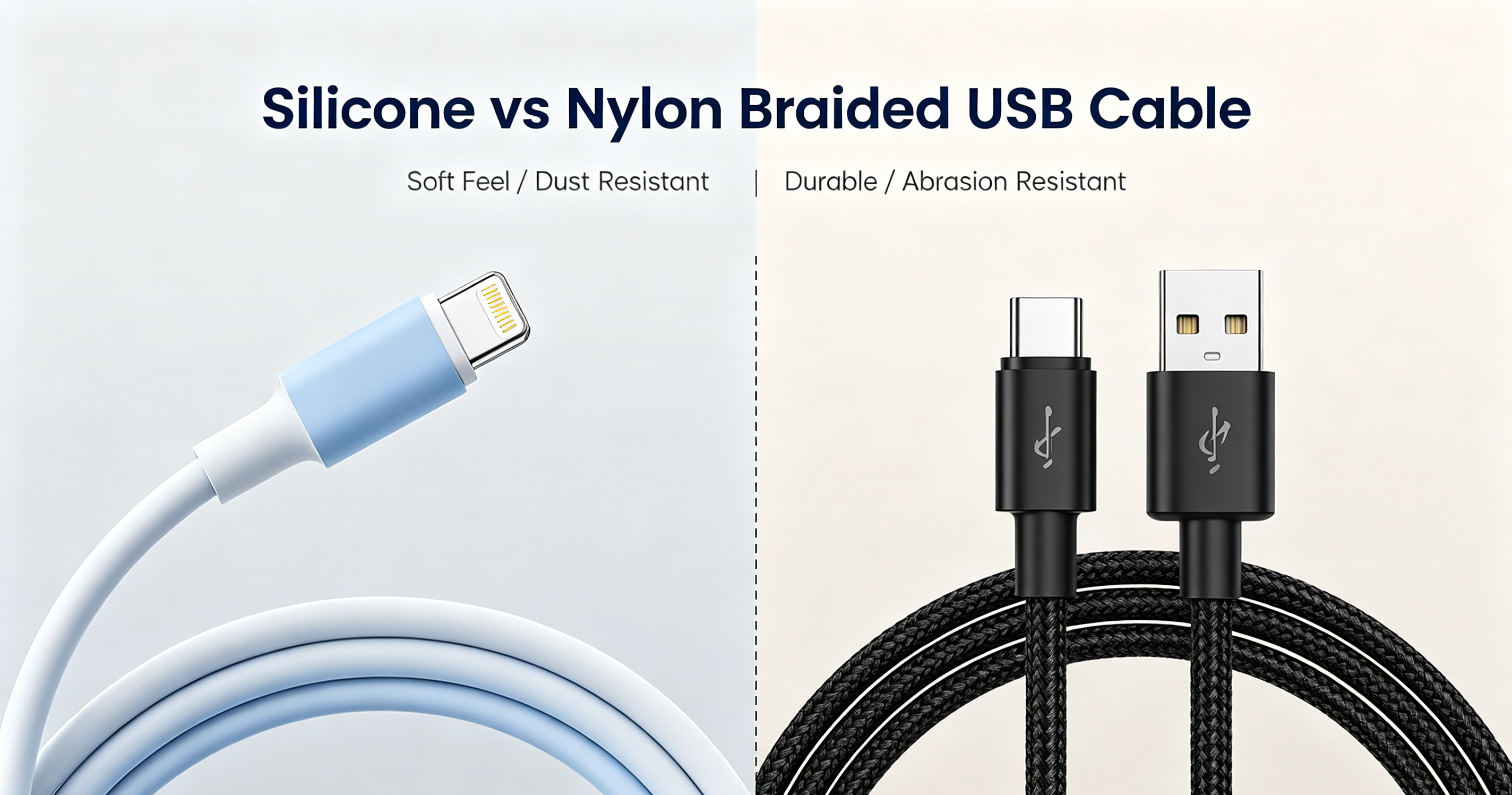
A jacket made of TPE or silicone instead of PVC largely sidesteps the phthalate issue, which is one reason many premium braided cables have moved that direction. Our breakdown of USB cable jacket materials explains the trade-offs of each option.
Warning Labels Are Not the Only Answer
The simplest response to a demand letter is a warning label, but for cables this is usually a poor commercial choice. A hangtag that says the product can expose you to lead or phthalates reads as a safety alarm to shoppers, and conversion rates drop. Most professional brands instead choose reformulation: specifying materials that test below safe-harbor levels so no warning is required at all.
That path costs slightly more per unit, but it removes the issue permanently instead of managing it. It also pairs naturally with the testing you already need for other programs — a factory running UL 9990 certification work will already have the material controls and documentation habits that Prop 65 demands rely on.
Documents to Request From Your Factory
Before you approve a production run, ask for these items in writing:
- Material declaration listing jacket, insulation, and connector materials by part number, with phthalate and lead content statements.
- Third-party test reports (CPSC-accepted lab preferred) covering DEHP, DINP, DBP, and lead, dated within the last 12 months and matched to your exact jacket and connector materials.
- RoHS and REACH reports — not the same law, but the same test data usually supports Prop 65 answers. See our overview of USB-IF and certification basics for how these programs interlock.
- Change-notification commitment: a clause stating the factory must notify you before substituting any raw material, since a silent PVC swap is the classic way compliant cables become non-compliant.
A Practical Workflow for Small Brands
You do not need a compliance department to handle this. A practical sequence looks like this: confirm the bill of materials in writing with your factory; require the test reports above against the actual production materials, not "similar" ones; re-test when the jacket, connector, or colorant changes; and keep every report version-numbered in a shared folder so you can answer a demand letter in days instead of weeks.
Prop 65 is not going away, and enforcement against cable listings keeps rising. None of these steps require a legal department — they require a factory that already keeps its material records in order and will send documents without being chased. The brands that stay quiet are the ones whose factories can prove, document by document, that nothing on the list is in the product. If you want a factory that treats compliance documentation as part of the product — not an afterthought — contact LINKSTRONG and we will walk you through the material and testing package we ship with every custom cable program.